
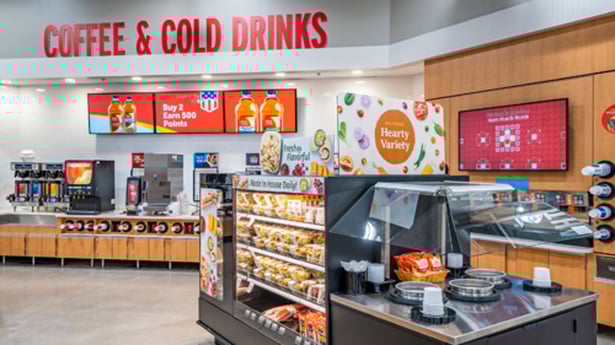
Foodservice is now one of the largest profit drivers in convenience stores. According to NACS, foodservice represents nearly 40% of in store gross margin dollars, which makes equipment uptime a direct revenue issue, not just a maintenance concern. As menus expand and equipment becomes more complex, facilities leaders are under pressure to keep assets running, safe, and cost controlled across hundreds or thousands of sites.
This guide breaks down the equipment that matters most, how downtime hurts profitability, and how leading c store operators are managing repairs, preventive maintenance, and replacement decisions in 2026.
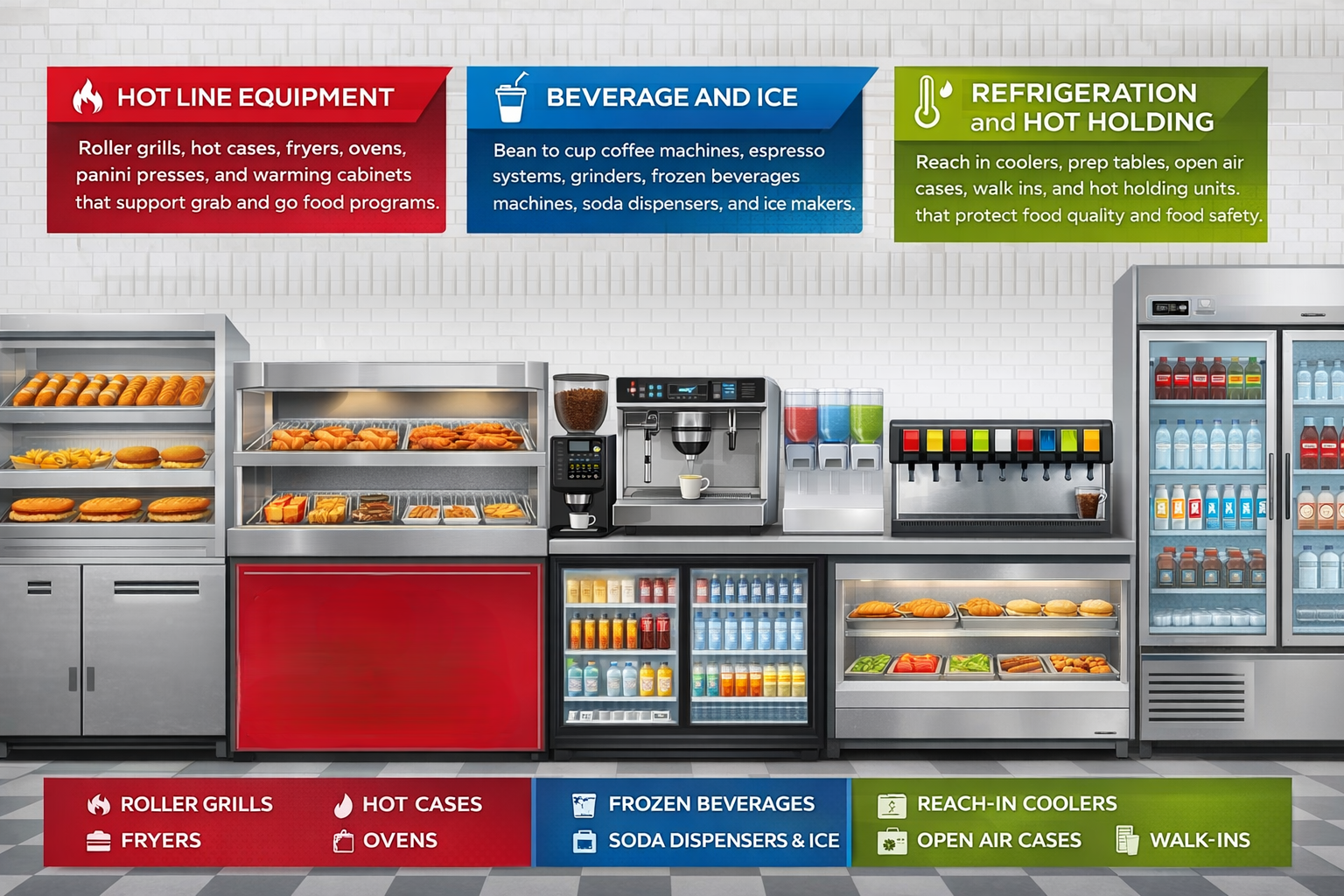
What Is Fast Foodservice Equipment in C Stores?
Fast foodservice equipment refers to revenue generating kitchen and beverage assets that support prepared food and dispensed drinks.
How Does Downtime Impact C Store Profitability?
Revenue, Margin, and Labor
When foodservice equipment goes down, stores lose high margin sales immediately. Teams are often pulled from customer facing roles to manage workarounds, clean ups, or refunds, which increases labor inefficiency.
Food Safety and Brand Risk
Temperature failures and sanitation issues increase the risk of food waste, health code violations, and reputational damage. A single failed inspection can shut down a profitable program for weeks.
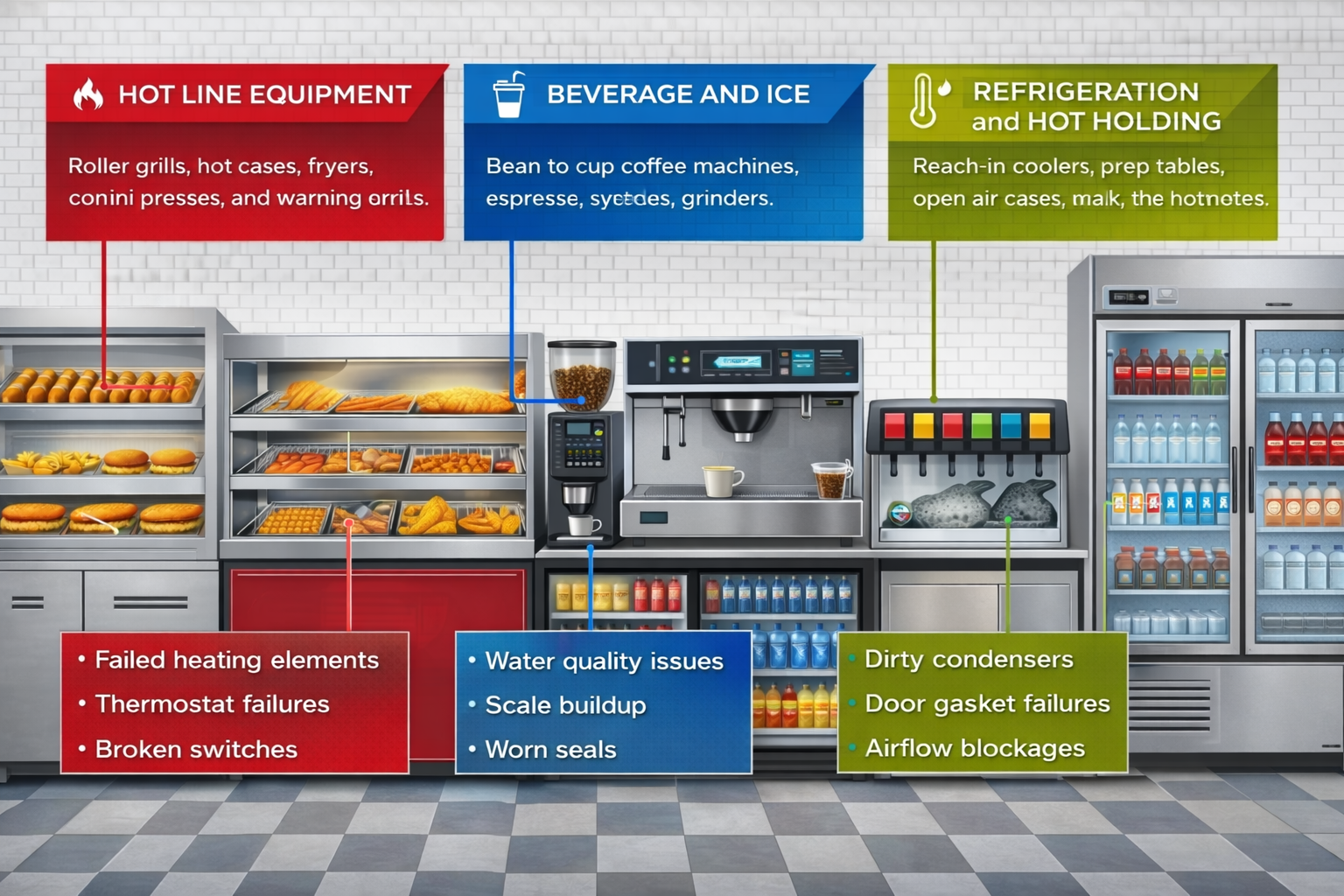
Most Common Failures and Fast Fixes
Repair vs Replace: How to Decide in 2026
Facilities leaders are increasingly using a Total Cost of Ownership (TCO) lens to guide repair versus replace decisions. TCO captures repair spend, energy use, downtime risk, food loss, and compliance exposure, revealing a clear inflection point for most c store foodservice equipment. Once assets reach roughly 7 to 10 years of service, repair frequency and costs rise sharply, often making continued maintenance more expensive than replacement.
Energy efficiency and regulatory pressure accelerate this shift. Newer equipment with high efficiency compressors and updated refrigerants can lower energy costs by 10% to 20% annually while reducing long term compliance risk. When rising repair costs converge with higher utility spend and failure risk, replacement becomes the more predictable and cost effective strategy for protecting uptime and controlling operating expenses.
Best Service Model for Multi Site C Stores
OEMs, Managed Service Providers, CFESA Technicians, and Managed Services
OEM service works best during warranty. Certified CFESA technicians are critical for food equipment expertise. Managed services models coordinate the right provider for each asset and location.
Single Source vs Self Managed
Self managing dozens of vendors limits visibility and control. Single source models improve response times, consistency, and cost governance across the portfolio.
What SLAs and Response Times to Require?
Criticality Tiers, Coverage, and Communication
Best programs define clear tiers for critical foodservice equipment, require response times under 4 hours for revenue stopping failures, and provide real time communication to store teams.
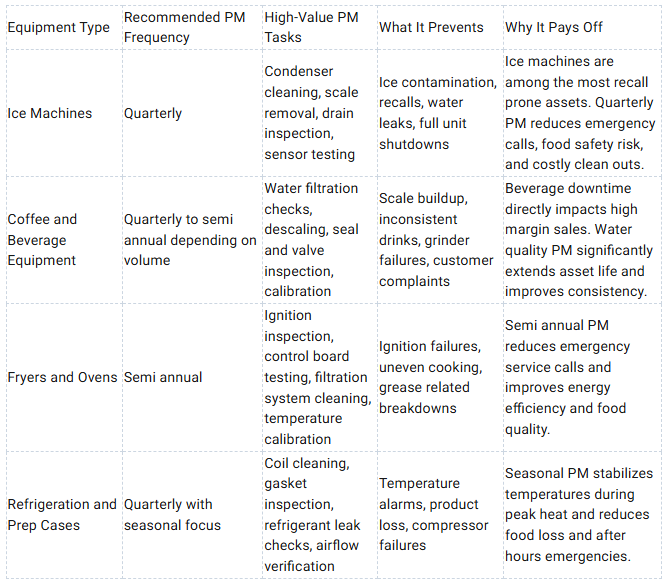
What Preventive Maintenance Actually Pays Off?
IoT and AI in 2026
Remote Monitoring, Alerts, and Predictive Maintenance
Temperature sensors, fault codes, and usage data are now feeding predictive models that flag failures before stores notice them.
Data Integration With Work Order Platforms
Integrated platforms connect alerts directly to work orders, reducing time to dispatch and preventing secondary damage.
Parts Management for Faster First Time Fixes
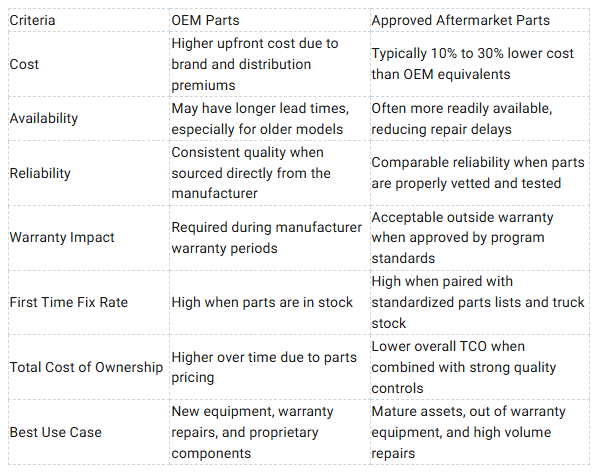
OEM vs Approved Aftermarket
What Compliance and Safety Rules Apply?
Foodservice equipment in convenience stores must comply with local Food Code requirements, Occupational Safety and Health Administration (OSHA) standards, and evolving refrigerant regulations that govern safe operation, sanitation, and environmental impact. Limiting service work to properly trained and certified technicians helps protect store teams, ensure regulatory compliance, and reduce brand and liability risk across the portfolio.
How to Budget and Measure Your Program
Leading operators use a mix of cost models, benchmarks, and key performance indicators to measure program health, including cost per work order, repeat repair rates, first time fix performance, and overall equipment uptime. When these metrics are combined with rolling forecasts that factor in repair trends and asset age, facilities teams can make smarter capital planning decisions, reduce surprise failures, and align maintenance spend with long term business goals.
Vixxo supports convenience stores at national scale with certified technicians, food equipment expertise, and AI driven service coordination. With millions of assets under management and deep c store experience, Vixxo helps facilities teams reduce downtime, control Total Cost of Ownership, and protect foodservice revenue across every site.
FAQs
What foodservice equipment causes the most downtime in c stores?
Ice machines, coffee equipment, and refrigeration drive the highest number of emergency calls without preventive maintenance.
How often should fast foodservice equipment be replaced?
Most assets last 7 to 12 years, but replacement should be based on Total Cost of Ownership, not age alone.
Is preventive maintenance really worth the cost?
Yes. Studies consistently show unplanned maintenance costs 3 to 9 times more than planned maintenance, especially for refrigeration and ice equipment.
Want to talk facilities?
Leave a comment or question below and we'll reach out!