


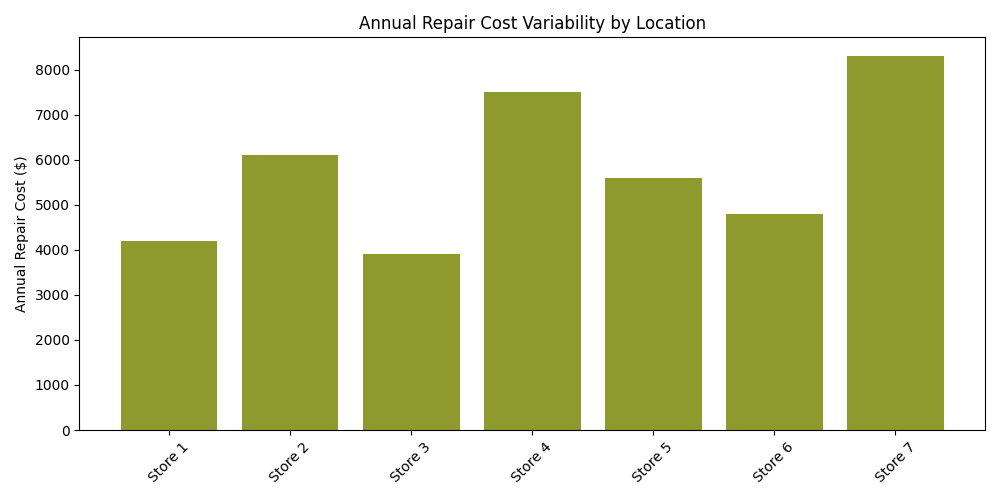
Multi site operators already track the familiar TCO (total cost of ownership) drivers: labor rates, parts pricing, trip charges, time on site, preventive maintenance coverage, and work order quality. What often goes unmeasured is the cost of variability across the portfolio. The same asset can have different run times, different environmental loads, different service behavior, and different vendor practices from site to site. That variability quietly compounds into higher spend, higher failure rates, and slower response times.
Retail, restaurant, grocery, and convenience chains feel this acutely as they scale formats, expand digital kitchens, and push for faster recovery times. TCO is no longer just a function of the work itself. It is a function of how consistently the work is performed across hundreds or thousands of locations.
Why Variability in the Field Drives Higher TCO
Different run conditions create different failure curves
Two identical reach ins can have completely different lifespans based on traffic, climate, door cycling, and staff behavior. Asset failure rates can vary by 30 to 50 percent depending on environment alone. Without normalized data, facility leaders struggle to predict spend or optimize PM intervals.
Inconsistent vendor practices inflate the cost of a ticket
When technician labor, diagnoses, and parts markups fluctuate from market to market, it becomes nearly impossible to benchmark whether a repair was efficient or simply expensive. This is the gap automated verification tools fill by auditing labor and parts against national historical data so customers never pay outside of the expected range.
Site by site decision making slows recovery
Variability also affects speed. A store with vague or inconsistent work order details inevitably receives slower service and higher repeat rates. A store with a standardized request process sees lower time on site, better first time fix rates, and fewer callbacks.
The Three Levers That Control Variability and Lower TCO
1. Normalize how every asset is serviced
Standardized scopes of work, consistent PM intervals, and clear repair expectations reduce noise in the system. When every technician follows the same service playbook, average cost per ticket drops and outliers become visible.
2. Centralize live performance data
Visibility is the key to spotting spikes in spend before they become budget problems. Vixxo’s tools track technician check in and check out through geofencing, validate labor, and compare every part used against national benchmarks. This produces true apples to apples comparisons across all stores.
3. Control price integrity across all locations
Large chains need pricing that stays stable regardless of geography. Automated invoice reviews, market rate validation, and rapid exception handling ensure that every location benefits from consistent, disciplined cost controls.
Quantifying the Impact of Reduced Variability
Facilities leaders often assume the biggest savings come from lowering rates. In reality, eliminating inconsistency between stores usually creates more value.
Benchmarks from multi site portfolios show that:
• Standardized scopes reduce annual repair costs by 12 to 18 percent
• Labor validation reduces hours billed per ticket by an average of 15 percent
• Real time invoice audits prevent three to six percent of unnecessary spend
• Consistent technician networks drive seven percent higher first time fix rates
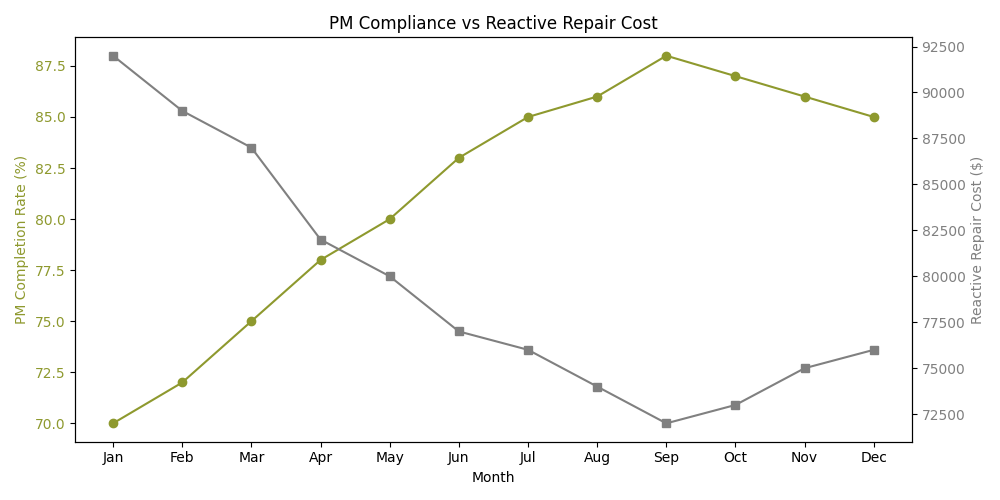
The pattern is easy to see in the data. As PM completion rises, reactive repair cost declines almost in parallel, which is one of the strongest levers for lowering TCO.
Once these improvements stack across thousands of work orders, the compounding effect becomes substantial. They also allow more accurate forecasting, which strengthens capital and operating plans.
How Vixxo Reduces Portfolio Variability at Scale
Real time validation
Automated auditing ensures every labor line and part cost aligns with market and historical standards.
Nationally vetted technician network
More than 150,000 qualified technicians enable consistent quality across every market.
Data guided dispatch
Centralized routing places the right technician on the right asset type, improving speed and accuracy.
Unified service standards
Common scopes, clear expectations, and predictable pricing reduce variability and protect budgets.
AI assisted troubleshooting
Technicians receive model specific guidance in real time, improving time to resolution and reducing repeat visits.
What Facilities Leaders Should Take Away
The next wave of cost optimization will be won by eliminating variability, not squeezing individual tickets. Facilities leaders who control the inconsistency across their networks see lower operating expenses, higher uptime, and far more predictable budgeting.
Vixxo’s integrated systems, verification tools, and national service network give multi site operators the control and transparency needed to deliver measurable, repeatable TCO improvements.
Want to talk facilities?
Leave a comment or question below and we'll reach out!