

.png?width=615&height=346&name=Article%20Images%20(6).png)
A massive winter storm, Winter Storm Fern, is ripping across the United States, impacting more than 200 million people with snow, ice, and frigid temperatures, spanning from the South all the way into the Northeast and New England. The system has already caused widespread power outages, canceled thousands of flights, and led multiple states to declare emergencies as it hurled heavy snow, sleet, and ice across a 2,000-mile stretch of the country. Several fatalities have been reported and extreme cold is expected to linger for days.
For facilities directors and VPs of facilities, this national weather event is a real-time reminder that severe winter weather isn’t seasonal noise — it’s a recurring operational threat that demands preparation well before temperatures drop.
The Cost of Being Unprepared
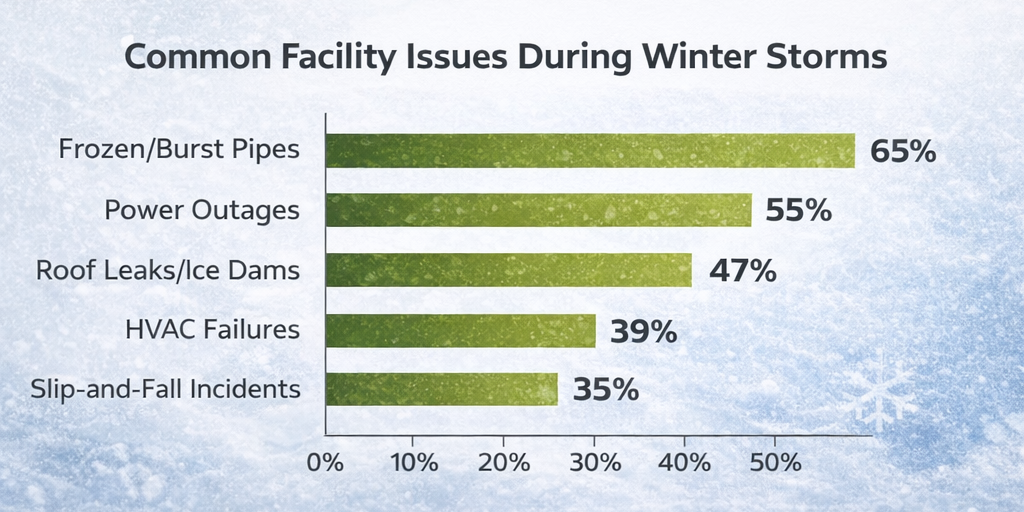
Freeze conditions can cause water lines to ice over and burst, leading to widespread water damage and costly restoration work. Even moderate ice accumulation can stress roofs, damage external utilities, and cause safety hazards for employees and customers, not just at homes but across commercial infrastructure.
The 2026 North American winter storm has already produced record low temperatures (as low as −43 °F in some regions) and over 1 million power outages — stressing the fragility of the built environment when freezing conditions hit.
Business continuity isn’t just about keeping doors open. It’s about preventing expensive repairs, safety incidents, and operational downtime that drag on profitability and reputation.
Top Preparations to Prioritize Today
Here are practical steps facility leaders should be executing before, during, and after severe winter weather impacts:
1. Strengthen Your Pipe Protection Protocols
Frozen and burst pipes are among the most common causes of facility damage in freezing weather. Preventative measures such as insulating exposed plumbing, maintaining a moderate heating schedule, and letting faucets drip during deep freezes can dramatically reduce risk.
Know the location of main shut-offs and have emergency plumbing resources on call. During power outages, prioritize heat retention around critical water lines to avoid freeze damage.
2. Get Ahead of Power Interruptions
Winter storms often lead to grid strain and outages, sometimes lasting days. Backup power solutions, including generator readiness and prioritized power feeds for critical systems, help maintain operations when the grid falters.
At the very least, ensure your electrical infrastructure is insulated against moisture and ice buildup.
3. Proactive Roof and Exterior Inspections
Heavy snow and ice add extraordinary load stress to building exteriors. Snow removal plans, gutter maintenance, and routine inspection of roof seals can prevent structural issues and safety hazards.
4. Snow and Ice Management Plans Should Be Live Documents
An effective snow and ice strategy goes beyond shovels. It includes contracted services for plowing and deicing, dedicated paths for emergency egress, and clear communication with tenants and staff regarding when surfaces are treated and safe to traverse.
Culture of Preparedness Pays Dividends
Winter weather doesn’t check your calendar. For facility leaders, winter storm preparedness should be baked into your year-round risk planning instead of being activated reactively. Whether protecting mechanical systems from ice build-up or ensuring life-safety systems remain operational in subzero conditions, preparation prevents surprises.
Historically, facilities that embrace proactive readiness: regular inspections, hazard assessments, and emergency supplies, experience fewer interruptions and lower repair bills than those that wait for the ice to hit.
Winter weather will continue to challenge facility operations. The question isn’t if the next storm will hit, but how prepared your teams will be when it does.
FAQs
What are the most common facility issues caused by winter ice storms?
Ice storms commonly lead to frozen or burst pipes, roof leaks from ice dams, power outages, HVAC failures, and slip-and-fall hazards. Water damage and electrical issues are among the most expensive and disruptive outcomes for commercial facilities during severe winter weather.
How can facilities teams prevent frozen and burst pipes during extreme cold?
Preventative steps include insulating exposed piping, maintaining consistent building heat, allowing faucets to drip during deep freezes, and identifying main water shut-off locations in advance. Proactive inspections before temperatures drop significantly reduce emergency repairs.
What facility systems should be prioritized during winter storm events?
Critical systems include plumbing, HVAC, electrical infrastructure, roofing, and life-safety systems. Facilities leaders should also prioritize backup power readiness, snow and ice removal plans, and access to emergency service providers.
How do winter storms impact facility operating costs?
Severe winter weather often drives higher emergency repair spend, extended downtime, safety incidents, and property damage. Reactive repairs during storms typically cost more due to after-hours labor, expedited parts, and repeat service calls.
Why is proactive winter storm planning important for multi-site facilities?
Multi-site portfolios face compounded risk during regional storms. Without standardized response plans and vendor readiness, delays and inconsistent service can escalate costs and prolong downtime across locations.
Want to talk facilities?
Leave a comment or question below and we'll reach out!