
In high-volume beverage concepts like Dunkin', Dutch Bros, Starbucks, and 7 Brew, coffee is not an add-on category. It is the business model.
Roughly 66% of U.S. adults drink coffee daily. More than half purchase from a coffee shop at least once per week. The U.S. branded coffee shop market now exceeds 42,000 locations and is projected to surpass 51,000 by 2029. This is a $70B+ category with sustained growth and aggressive expansion.
Translation for facilities leaders: this is not seasonal traffic. It is recurring, peak-hour revenue that your equipment must deliver every single day.
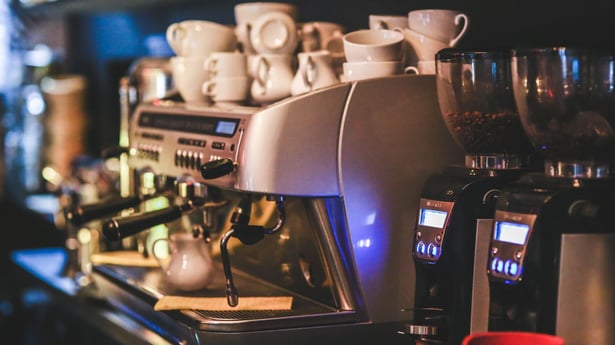
If coffee drives the majority of revenue, then espresso machines, grinders, and beverage systems are not back-of-house equipment. They are revenue infrastructure.
Downtime Is a Revenue Event, Not a Work Order
In a traditional QSR, a fryer going down is disruptive. In a beverage-first QSR, an espresso machine going down is existential.
Peak windows are short and intense. Morning rush can represent a disproportionate share of daily sales. A two-hour outage is not just a repair cost. It is:
• Lost transactions
• Lost loyalty visits
• Increased drive-thru times
• Social media complaints
• Stressed store teams
Meanwhile, competition is accelerating. Starbucks’ U.S. market share has slipped below 50% as fast-growing concepts like Dutch Bros and 7 Brew aggressively expand. Dutch Bros recently posted nearly 30% year-over-year revenue growth, and 7 Brew has reported triple-digit traffic growth in new markets.
Customers have options. If your equipment fails, they simply drive across the street.
Espresso Machines Are Micro Utilities
Modern beverage systems are no longer simple brewers. They require:
• Dedicated electrical capacity
• Water filtration and pressure management
• Drainage coordination
• Software calibration
• Consistent preventive maintenance
They run all day at high output. They generate heat that affects HVAC load. They influence queue times and drive-thru efficiency.
Facilities teams already treat HVAC and refrigeration as Tier 1 assets because downtime impacts operations. In beverage-first QSR, espresso belongs in that same tier.
The Real Cost of “Just Fix It”
Most brands still manage beverage equipment through standard break-fix workflows. That model hides real cost drivers:
• Repeat service calls within 30 days
• Poor calibration impacting drink consistency
• Energy waste from scaled boilers
• Labor inefficiency when baristas compensate for underperforming equipment
• Accelerated capital replacement due to deferred PM
In high-volume QSR beverage environments, small inefficiencies multiply fast across hundreds of stores.
Tier Coffee Assets Like You Tier HVAC
If beverage drives the business, facilities strategy should reflect that reality.
That means:
- SLA Tiering by Volume
Flag top revenue stores for tighter response times and priority dispatch. - Water Strategy by Region
Hard water markets require different filtration cadence and descaling intervals than soft water markets. - Repair Velocity Tracking
Track work orders per machine per year. Escalate to capital planning when repair frequency spikes. - First-Time Fix Discipline
Reduce repeat calls by aligning technicians to specific equipment platforms and ensuring parts availability.
Coffee Consistency Is a Facilities Metric
Customers at premium beverage brands expect consistency. Temperature drift, pressure inconsistency, or poor calibration shows up immediately in taste.
Facilities controls:
• Preventive maintenance cadence
• Calibration standards
• Equipment cleanliness
• Repair quality
Brand reputation and facilities execution are now directly linked.
Facilities as the Margin Multiplier
Marketing drives traffic.
Operations drives speed.
Facilities protects uptime.
In beverage-first QSR, uptime equals revenue. It equals throughput. It equals customer loyalty.
The brands that win will not just invest in better machines. They will align facilities strategy with beverage criticality.
Because in high-volume coffee QSR, espresso is not equipment. It is infrastructure.
Frequently Asked Questions
Why should beverage equipment be treated as Tier 1 infrastructure?
In beverage-first QSR brands, espresso and specialty drink systems drive the majority of revenue. Downtime directly impacts sales and customer loyalty.
How does preventive maintenance impact drive-thru performance?
Consistent PM improves calibration, reduces breakdowns, and stabilizes drink quality, which supports faster throughput and fewer repeat service calls.
When should espresso machines shift from repair to replacement strategy?
When repair frequency increases year over year, repeat calls occur within 30 days, or cumulative repair spend approaches a significant portion of replacement cost, a Total Cost of Ownership review is warranted.
How does water quality affect performance in high-volume beverage brands?
Hard water accelerates scale buildup, increases energy draw, and reduces heating efficiency. Structured filtration and descaling programs reduce emergency repairs and extend asset life.
Want to talk facilities?
Leave a comment or question below and we'll reach out!