
.png?width=615&height=346&name=Article%20Images%20(12).png)
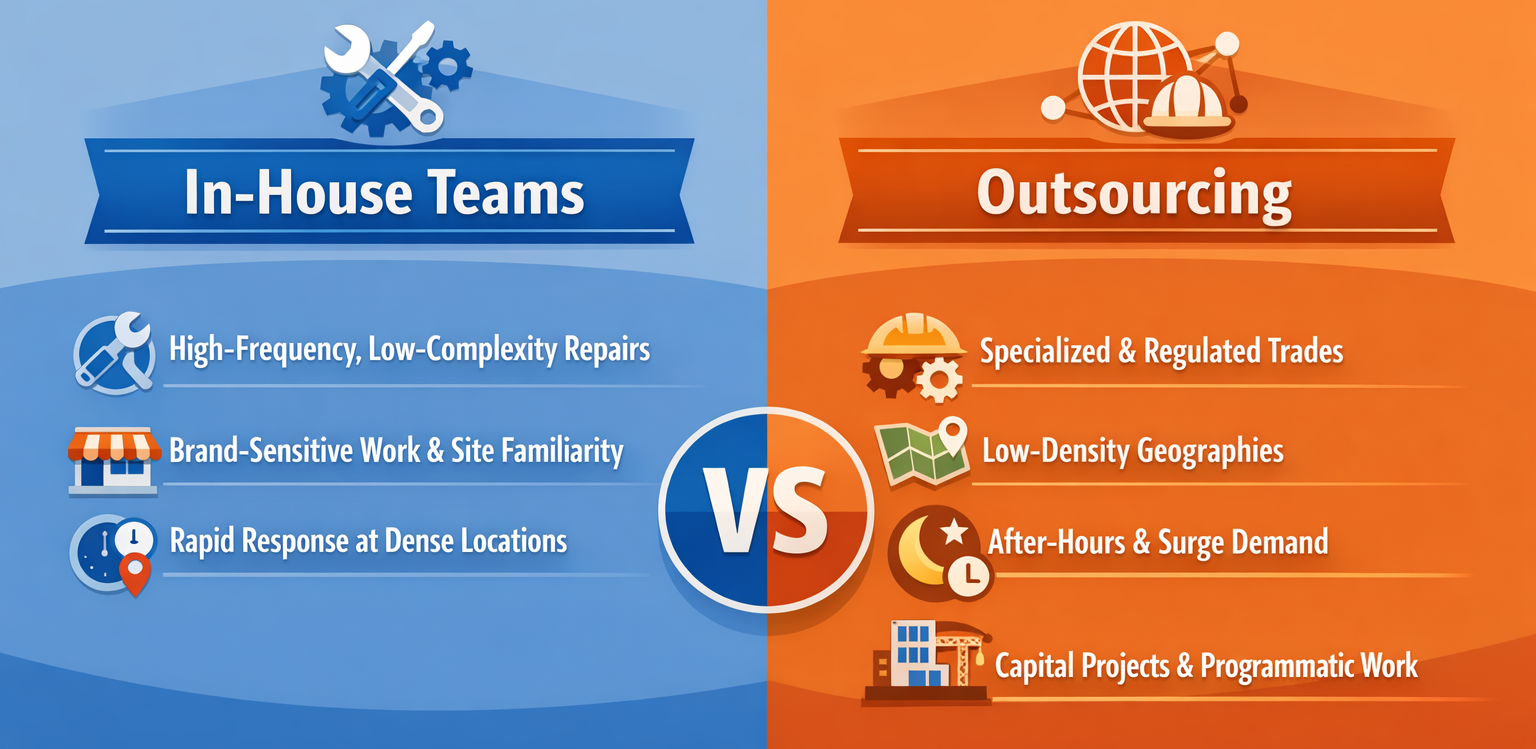
Many facility leaders are rebuilding internal teams to regain control, improve responsiveness, and protect institutional knowledge. At the same time, few organizations can staff every trade, geography, and coverage window efficiently. The result is a hybrid reality: in-house technicians handling core work, supported by outsourced partners for scale, specialization, and surge capacity.
Outsourcing continues to deliver meaningful value when it is intentionally structured around asset risk, governance, and outcomes. Whether organizations rely on fully outsourced models or a blend of internal teams and external partners, the most effective programs avoid common pitfalls by aligning vendors to where they create the greatest impact and keeping facility resources focused on the work that drives the highest return.
Mapping Critical Assets to Decide What Stays In-House vs Outsourced
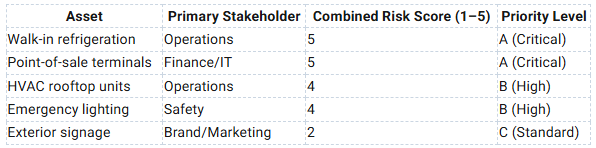
The first mistake organizations make is outsourcing everything equally. A structured asset criticality matrix helps determine which assets should remain primarily in-house and which are better supported by external partners.
Sample asset criticality matrix:
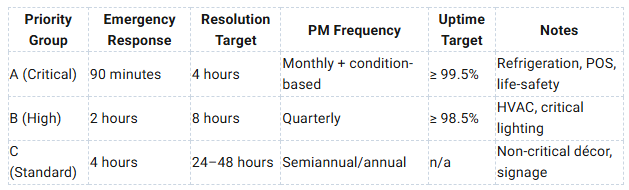
This framework ensures outsourcing fills gaps instead of diluting internal effectiveness.
Using Best-Value Procurement to Support Hybrid Teams
When organizations rely on internal technicians, vendor selection matters even more. Lowest price sourcing often creates friction: rework, callbacks, and escalations that ultimately land back on internal staff.
Best-value procurement (BVP) evaluates providers on total impact, not just hourly rates, allowing vendors to integrate cleanly with in-house teams.
Example BVP scoring matrix:
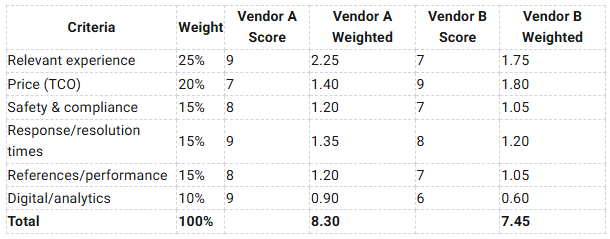
This approach reduces friction, protects internal capacity, and improves outcomes across both models.
Designing Modular SLAs That Protect In-House Capacity
One of the most common outsourcing pitfalls is misaligned SLAs that overload internal teams with escalations or rework. Modular SLAs allow organizations to apply precision where it matters most.
Example modular SLA tiers:
This structure ensures outsourced providers absorb complexity instead of pushing it back onto internal technicians.
Digital Oversight That Enables Internal Teams to Lead
Hybrid programs fail when data lives in silos. Centralized platforms that integrate work orders, assets, invoices, and SLAs allow internal teams to stay in control while outsourcing execution.
Key KPIs for hybrid oversight:
- Average response and resolution time by asset group
- First-call fix rate and repeat dispatch rate
- Maintenance backlog in weeks
- SLA attainment by vendor and region
With shared visibility, internal technicians focus on technical execution while leadership manages performance, spend, and risk centrally.
Governance That Prevents Vendor Drift
Clear governance prevents the slow erosion of accountability that often frustrates in-house teams.
Example communication and escalation path:
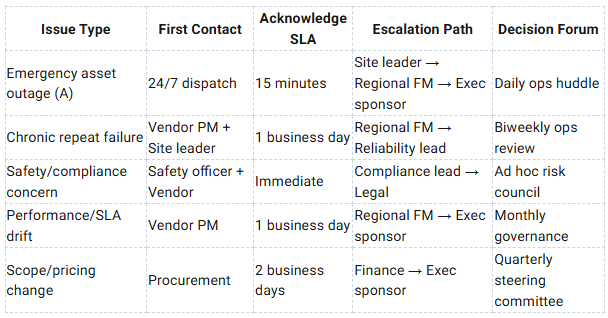
This model keeps internal teams from becoming default problem-solvers for vendor shortcomings.
Continuous Review to Balance Internal and External Resources
Hybrid programs require constant recalibration. Monthly and quarterly reviews ensure outsourcing continues to complement internal teams as portfolios evolve.
Recommended cadence:
- Monthly: KPI scorecards, SLA misses, root cause actions
- Quarterly: Cost trends, backlog health, vendor performance
- Annual: SLA tier refresh, sourcing adjustments, capability gaps
Facilities leaders that treat outsourcing as a dynamic extension of their teams consistently outperform those who treat it as a static contract.
Facilities organizations do not have to choose between internal teams and outsourcing. The most resilient models combine both, using outsourcing to extend reach, absorb volatility, and protect internal expertise while maintaining control over outcomes.
Frequently Asked Questions
What are the most common outsourcing pitfalls in hybrid IFM models?
Misaligned SLAs, lowest-price vendor selection, poor visibility, and unclear escalation paths often push work back onto internal teams instead of reducing their load.
How can outsourcing support in-house technicians without replacing them?
Outsourcing should cover specialized trades, low-density locations, after-hours needs, and surge demand, allowing internal teams to focus on high-value, high-familiarity work.
Why is asset criticality important when balancing internal and outsourced work?
Criticality ensures the right response level is applied to each asset, preventing overspend while protecting uptime and technician capacity.
What role do digital platforms play in hybrid facilities management?
They provide shared visibility across vendors and internal teams, enabling proactive oversight, cost control, and faster issue resolution.
How often should outsourcing contracts be revisited in hybrid models?
At minimum annually, with ongoing monthly and quarterly performance reviews to ensure alignment with evolving internal capabilities.
Want to talk facilities?
Leave a comment or question below and we'll reach out!