

No one budgets for door closers. Everyone pays for them.
In multi-site portfolios, facilities leaders spend most of their time managing big-ticket assets like HVAC systems, refrigeration, and electrical infrastructure. Those systems deserve attention. They are expensive, critical, and highly visible when they fail.
But the quiet budget killers are often much smaller, much cheaper, and far more frequent.
These are the facilities blind spots. The assets no one thinks about until they fail, then fail again.
What Counts as a Facilities Blind Spot?
Facilities blind spots are assets that share three characteristics: low individual repair cost, high failure frequency, and limited visibility in reporting. Because each repair appears minor on its own, these issues rarely receive root-cause analysis or long-term planning.
Common blind spots include door closers and hinges, floor drains, lighting controls and sensors, exhaust fans, automatic door operators, and restroom hardware beyond fixtures.
The contrast between these blind spots and big-ticket assets are stark:
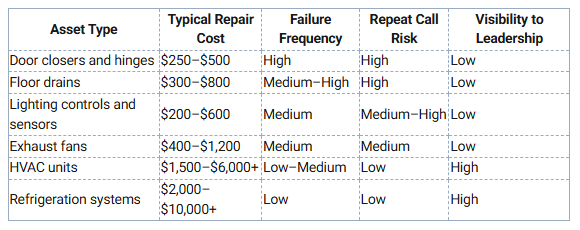
Individually, blind spot repairs rarely raise alarms. Across hundreds or thousands of locations, they quietly become a material driver of work order volume.
Why Small Failures Drive Big Spend
The issue with blind spots is not the first repair. It's the pattern that follows.
A door closer is replaced without checking door alignment. The closer fails again. A floor drain is cleared without inspection. The backup returns. A lighting sensor is swapped without addressing wiring or placement. The lights flicker again weeks later.
Each fix appears reasonable in isolation. Together, they create a steady stream of repeat work orders. More importantly, the financial impact becomes clear when viewed over time.
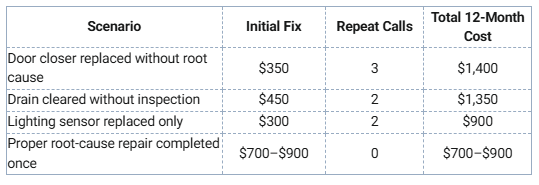
This is where facilities budgets quietly erode. The problem is volume, not severity.
The Hidden Cost Is Volume, Not Price
Facilities teams often focus cost control efforts on labor rates, trip charges, and parts markup. Those levers matter, but blind spots operate differently.
A $350 repair repeated multiple times is more expensive than a $900 repair done correctly once. When repeat work orders account for 20% to 30% of reactive maintenance volume in certain trades, the financial impact scales quickly.
Why These Issues Are So Hard to See
Facilities blind spots persist because of how maintenance programs are structured. Work orders often lack detailed resolution notes. Asset records may not distinguish between similar components within the same site. Preventive maintenance programs prioritize major systems, leaving smaller assets unmanaged until failure.
There is also operational pressure. Store teams want fast fixes. Technicians receive narrow scopes. Facilities leaders manage thousands of work orders and cannot investigate every minor repair.
The result is reactive maintenance that appears controlled while quietly repeating.
How High-Performing Facilities Teams Address Blind Spots
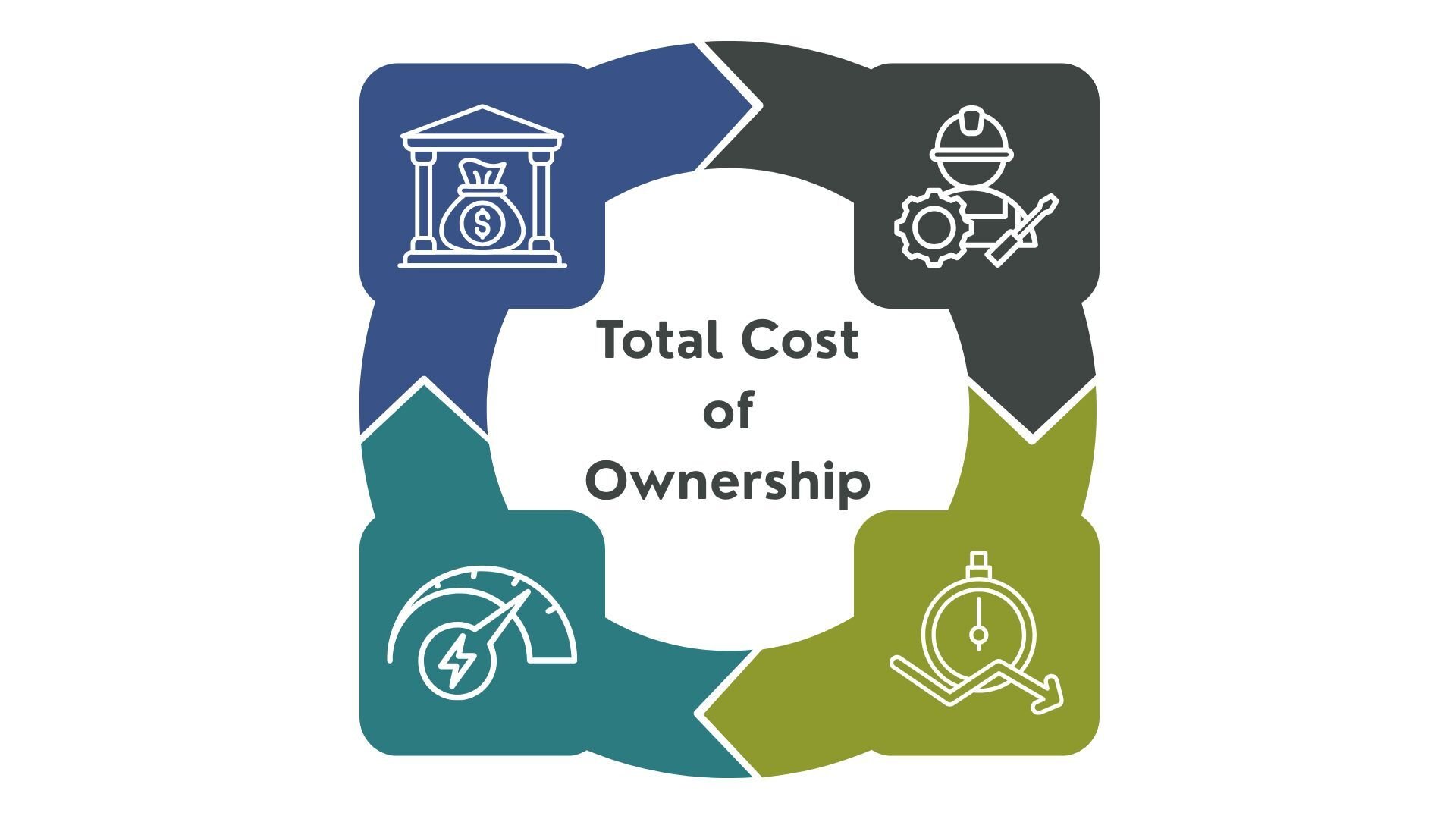
Leading facilities organizations track repeat calls by asset type, not just by location. They require resolution notes that document why failures occurred. They apply standardized repair approaches for high-frequency assets and evaluate total cost of ownership instead of invoice cost alone. Reducing repair volume, not just negotiating rates, is where sustainable savings come from.
Making the Invisible Visible
Facilities blind spots thrive because they are easy to ignore. When leaders analyze repeat repairs and look beyond individual invoices, patterns emerge quickly. Addressing these overlooked assets reduces work order volume, stabilizes spend, and improves the store experience without major capital investment.
Sometimes the biggest facilities wins come from the smallest fixes.
FAQs
What are facilities blind spots?
Facilities blind spots are low-cost, frequently failing assets such as door closers, drains, lighting controls, and exhaust fans that often escape preventive maintenance planning and drive repeat work orders.
Why do small facility issues create so much cost?
The cost comes from repetition. Quick fixes that do not address root causes lead to multiple service calls over time, especially across large portfolios.
How can facilities leaders reduce repeat repairs?
Tracking repeat work orders by asset type, requiring clear resolution notes, standardizing repairs, and focusing on total cost of ownership instead of invoice cost are key steps.
Are blind spots usually included in preventive maintenance programs?
Often they are not. Most preventive maintenance programs prioritize major systems like HVAC and refrigeration, leaving smaller assets unmanaged until they fail.
Want to talk facilities?
Leave a comment or question below and we'll reach out!