
.png?width=511&height=287&name=Article%20Images%20(18).png)
Key Takeaways for Facilities Leaders
- 30M daily fuel customers = conversion opportunity. Forecourt traffic only becomes margin when facilities drive customers inside.
- 28% of transactions are fuel-only. Without strong in-store conditions, those visits never convert.
- 82% will drive 5 minutes out of their way for a store they like. Clean, safe, well-maintained sites build loyalty beyond fuel price.
- 52% of in-store shoppers buy a beverage. Refrigeration uptime directly protects high-margin sales.
- Foodservice = 27.7% of in-store sales dollars. Equipment reliability now impacts core revenue, not side revenue.
Facilities performance is no longer operational support. It is revenue infrastructure.
Data sourced from the NACS State of the Industry Report® of 2024 Data, National Association of Convenience Stores (NACS). Learn more at https://www.convenience.org/Research/State-of-the-Industry.
The Scale of the Opportunity
Convenience stores operate at a level of daily volume most retail segments never see. The numbers alone explain why conversion matters.
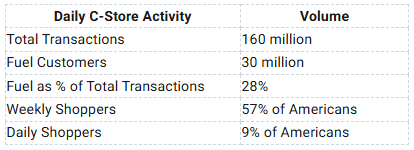
Fuel brings traffic. But fuel alone does not drive margin.
If even a small percentage of those 30 million daily fuel customers convert inside, the revenue lift is significant. Facilities conditions are what influence that decision in real time.
What Gets Customers Inside?
The conversion trigger is rarely random. Consumer behavior data reveals clear patterns that facilities teams directly influence.
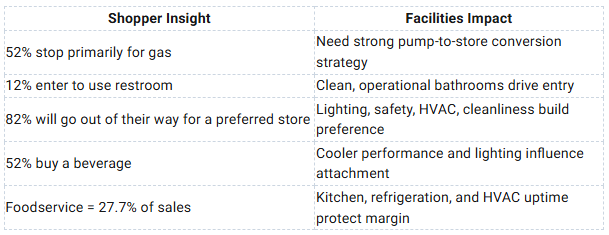
Every one of these insights ties back to physical asset performance.
The Bathroom Is a Brand Signal
Fuel-driven customers are more likely to enter for restroom use than for shopping.
A clean restroom:
- Increases dwell time
- Improves brand perception
- Encourages impulse purchases
- Reduces price sensitivity over time
A neglected restroom eliminates conversion before it starts.
Plumbing reliability, cleaning cadence, lighting, and rapid dispatch all matter.
Beverage and Foodservice Drive Margin
More than half of in-store shoppers leave with a beverage. Foodservice now represents over a quarter of in-store sales.
These categories depend on:
- Refrigeration uptime
- Cooler temperature consistency
- HVAC performance
- Equipment maintenance
- Lighting and display standards
When equipment fails, margin disappears immediately.
Facilities Is the Differentiator
Small facility failures have outsized impact:
- Dark canopy → reduced evening traffic
- HVAC inconsistency → shorter dwell time
- Broken ice machine → lost beverage attachment
- Refrigeration downtime → lost product and lost trust
In a system processing 160 million transactions daily, inconsistency compounds fast.
Where Facilities Leaders Should Focus
- Restroom uptime and inspection controls
- Cold chain integrity and PM compliance
- Lighting and safety standards
- HVAC reliability for comfort and food quality
- Rapid response for revenue-generating assets
Pump traffic is guaranteed.
Loyalty is earned.
Facilities performance is what converts 30 million daily fuel stops into profitable, repeat customers.
FAQs
How many Americans fuel at convenience stores daily?
Approximately 30 million.
How important are beverages?
52% of in-store shoppers purchase one, making refrigeration uptime critical.
Why does facilities matter in conversion?
82% of customers will drive out of their way for a store they prefer. Cleanliness, safety, and reliability create that preference.
What role does foodservice play?
Foodservice represents 27.7% of in-store sales dollars, making equipment reliability a revenue protection strategy.
Want to talk facilities?
Leave a comment or question below and we'll reach out!