
.png?width=615&height=346&name=Article%20Images%20(2).png)
Coffee demand is no longer just high. It is increasingly predictable.
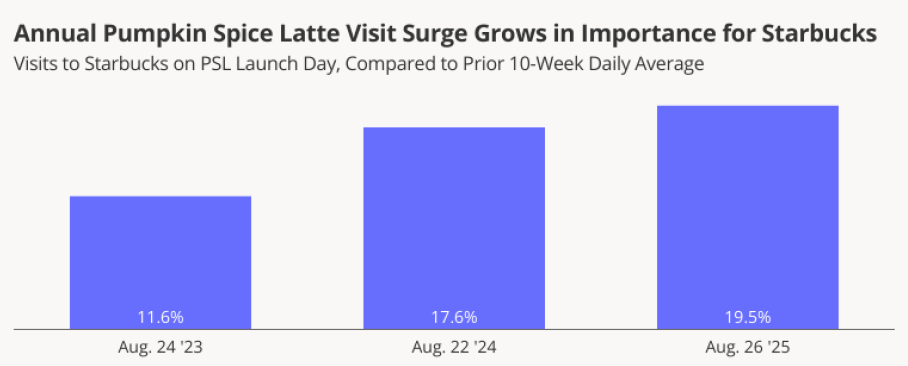
Placer.ai’s December 2025 coffee report shows that some of the biggest traffic gains in the category are driven by calendar-based moments, from seasonal launches like the Pumpkin Spice Latte to recurring monthly promotions that reliably generate visit spikes.
In August 2025 alone, Starbucks’ Pumpkin Spice Latte launch drove a 19.5% increase in traffic compared to the prior ten-week average, outperforming similar events in previous years.
Source: Placer.ai, 6 Coffee-Inspired Strategies That Can Reshape Dining in 2026, December 2025
For facilities leaders, this predictability changes the rules.
Calendar Ownership Is Scaling Beyond Mega-Brands
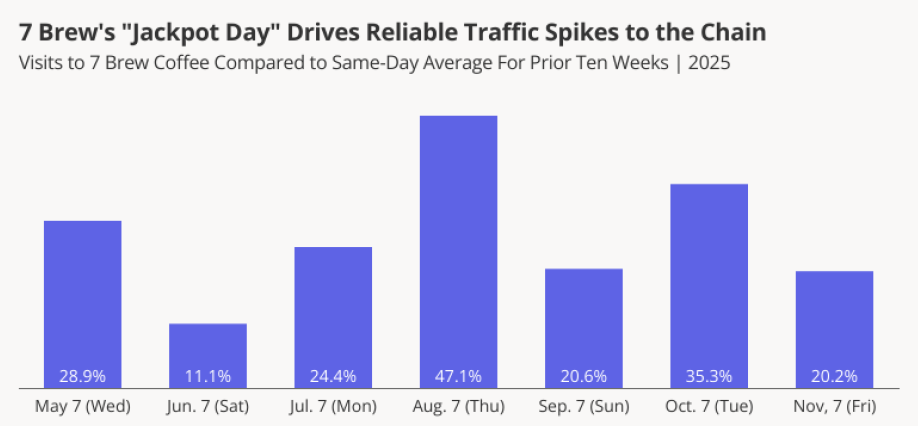
Placer.ai highlights that emerging coffee concepts are also “owning the calendar” through recurring promotions that customers plan around. 7 Brew’s monthly Jackpot Day, held on the 7th of each month, is a clear example.
After expanding Jackpot Day from a limited-time promotion to an all-day event in August 2025, 7 Brew generated a 47.1% traffic lift versus a typical Thursday, with subsequent months continuing to deliver elevated visits through themed giveaways and limited-time offers. These events concentrate demand into predictable windows, creating consistent traffic surges rather than one-off spikes.
Source: Placer.ai, 6 Coffee-Inspired Strategies That Can Reshape Dining in 2026, December 2025
For facilities leaders, the takeaway is clear: calendar-driven demand is becoming operationally repeatable, not occasional.
When Demand Is Known, Downtime Becomes Less Defensible
Unlike weather-driven surges or unexpected outages, promotions like PSL launches and Jackpot Day are visible weeks or months in advance. December and January coffee peaks are not surprises. Neither are monthly or seasonal activations designed to drive urgency and habit.
When facilities issues occur during these moments, they are no longer viewed as unavoidable disruptions. They are viewed as planning failures.
A beverage station outage during a known promotion window undermines marketing investment, strains frontline labor, and erodes customer trust at the exact moment brands are trying to reinforce loyalty.
Why Predictable Spikes Expose Weak Maintenance Models
Recurring demand spikes amplify asset utilization and failure sensitivity at the store level. Beverage equipment runs harder for longer. Electrical and plumbing systems operate under sustained peak loads. Any delay in service response or incomplete repair is magnified by volume.
Facilities programs built around average conditions often struggle during these moments. Reactive maintenance models that wait for failure are especially vulnerable when the cost of downtime is highest and most visible.
Facilities leaders overseeing coffee-forward convenience stores, grocery, and retail environments increasingly need to plan for peak readiness, not baseline performance.
Facilities Readiness as a Competitive Advantage
Organizations that align facilities strategy with the commercial calendar are better positioned to capture the full value of traffic spikes. Preventive maintenance becomes a revenue enabler. Service coverage is aligned to known surge periods. Asset uptime is measured when it matters most.
At Vixxo, facilities readiness is designed around this reality. By combining national scale, trade specialization, and real-time visibility, facilities teams can prepare for predictable demand spikes instead of reacting to them. Coffee brands may own the calendar. Facilities teams determine whether that ownership pays off.
FAQs
Why do predictable traffic spikes matter for facilities teams?
Because known demand surges increase asset utilization and raise the cost of downtime, making failures more visible and more expensive.
What facility systems are most stressed during coffee promotions?
Coffee and beverage equipment, electrical systems, plumbing, and HVAC experience the highest strain during promotion-driven peaks.
How can facilities leaders prepare for known demand spikes?
By prioritizing preventive maintenance, aligning service coverage to peak periods, and managing assets based on total cost of ownership rather than reactive repair costs.
Want to talk facilities?
Leave a comment or question below and we'll reach out!