
.png?width=615&height=346&name=Article%20Images%20(7).png)
How Preventative Maintenance Protects Total Cost of Ownership
Winter is one of the most expensive seasons for facilities operations, yet many organizations still treat cold weather as a temporary disruption rather than a structural cost driver. For multi-site retail, grocery, restaurant, and convenience store portfolios, winter conditions amplify weaknesses in assets, processes, and service models. The result is higher Total Cost of Ownership (TCO) driven by emergency repairs, accelerated asset wear, repeat visits, and energy inefficiency.
Facilities leaders who plan for winter through preventative maintenance are not just protecting uptime. They are actively stabilizing long-term costs.
Why Winter Exposes Hidden TCO Risk
Cold weather places sustained stress on critical systems. HVAC units run longer and harder. Refrigeration systems face temperature fluctuations that increase failure risk. Doors, docks, and exterior assets experience mechanical strain. Plumbing failures escalate quickly from minor issues into emergency events.
From a TCO perspective, the problem is not the weather itself. It is the reactive response pattern it creates.
Unplanned maintenance typically costs 3 to 9x more than planned work due to overtime labor, expedited parts, travel premiums, and longer downtime. Winter also increases callback rates when temporary fixes are made under time pressure, driving duplicate truck rolls and compounding costs.
According to Vixxo facilities assessments, most organizations overspend by 10 to 15% annually due to reactive maintenance patterns and limited visibility into true cost drivers. Winter is where that overspend accelerates.
Preventative Maintenance as a Winter Cost Control Strategy
Preventative maintenance shifts winter from a crisis season to a controlled operating period. By identifying and addressing vulnerabilities before temperatures drop, facilities teams reduce emergency dispatches and protect asset lifespan.
Key winter-focused preventative maintenance activities include HVAC inspections and airflow calibration, refrigeration performance checks, door and dock hardware servicing, pipe insulation verification, and exterior asset readiness. These actions reduce failure frequency, stabilize energy consumption, and improve first-time fix rates.
Vixxo data shows that consistent preventative maintenance can reduce repair volume by up to 60% in the first year, with sustained reductions of 35 to 40% over three to four years compared to assets without maintenance programs. Energy costs at maintained locations have been shown to drop by over 16% in year one, with savings reversing when maintenance is discontinued.
How Winter Preventative Maintenance Impacts TCO
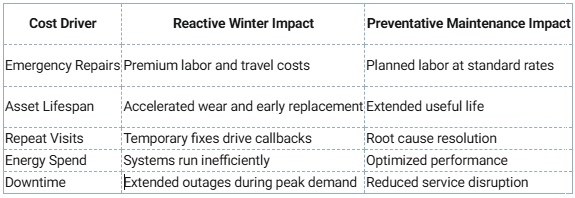
This is why Vixxo emphasizes TCO over hourly rates. Lower labor rates do not offset repeat visits, downtime, or shortened asset life. Paying slightly more for the right repair at the right time consistently delivers lower total cost outcomes. Source: https://www.vixxo.com/resources/containing-facility-and-equipment-costs
From Seasonal Preparation to Portfolio Strategy
Winter-proofing should not live in a checklist. It should be embedded into a portfolio-wide facilities strategy supported by real-time data, standardized service delivery, and accountability across trades.
With over 2.2 million assets under management and a network of 150,000+ technicians, Vixxo helps multi-site brands transition from reactive winter responses to preventative, TCO-focused programs that scale across every location.
The payoff is not just fewer winter emergencies. It is predictable spend, higher asset uptime, and stronger financial control when conditions are toughest.
FAQs
How does winter impact Total Cost of Ownership?
Winter increases emergency repairs, energy usage, repeat service calls, and accelerates asset wear, all of which raise long-term ownership costs beyond the initial repair invoice.
Which assets should be prioritized for winter preventative maintenance?
HVAC, refrigeration, plumbing, doors and docks, and exterior infrastructure typically deliver the highest winter TCO risk and the strongest ROI when proactively maintained.
Is preventative maintenance still cost effective during budget pressure?
Yes. Preventative maintenance reduces unplanned work orders that cost significantly more and helps stabilize spend during peak demand periods, making it a critical cost control lever.
How early should winter preparation begin?
Ideally 60 to 90 days before sustained cold weather to allow time for inspections, corrections, and program alignment across locations.
Want to talk facilities?
Leave a comment or question below and we'll reach out!