

Keeping facilities management (FM) staff safe and properly licensed is a regulatory requirement and a core driver of uptime and brand protection. The path is simple: define the standards that apply to your sites, train people consistently, formalize your safety program, communicate clearly, verify credentials, use the right technology, and lead with culture. The seven steps below offer a repeatable framework to reduce risk and strengthen compliance across multi-site portfolios.
Vixxo’s Approach to FM Staff Safety and Licensing
At Vixxo, we connect people, place, and process to improve compliance oversight and reduce risk across national portfolios. Our network of more than 150,000 vetted technicians, centralized dispatch, and analytics tools give leaders real-time visibility into licensing status, safety training, and work quality. This transparency supports faster decisions, fewer disruptions, and stronger confidence in field execution.
The steps below reflect the framework we use to help customers protect workers and maintain operational continuity.
1. Understand Applicable Safety Regulations for FM Staff
Safety regulations define the legal and practical requirements needed to protect workers and occupants. FM teams must comply with federal, state, and local authorities, along with industry standards for specific trades.
Key sources: OSHA, state licensing boards, local AHJs, and trade-specific codes.
FM teams play a central role in ensuring the built environment meets regulatory requirements, which aligns with IFMA’s core competency expectations.
Create a simple regulatory matrix for each site type and asset category.
Abbreviated examples:
- Retail: egress inspections, fire protection, electrical licenses
- Foodservice: EPA 608 for refrigeration, hot work permits, grease system compliance
- Manufacturing: machine guarding, confined space, high-voltage electrical licensing
2. Provide Comprehensive and Ongoing Safety Training
Training helps FM personnel identify hazards, avoid incidents, and meet licensing standards. A blended model ensures consistency across sites and providers.
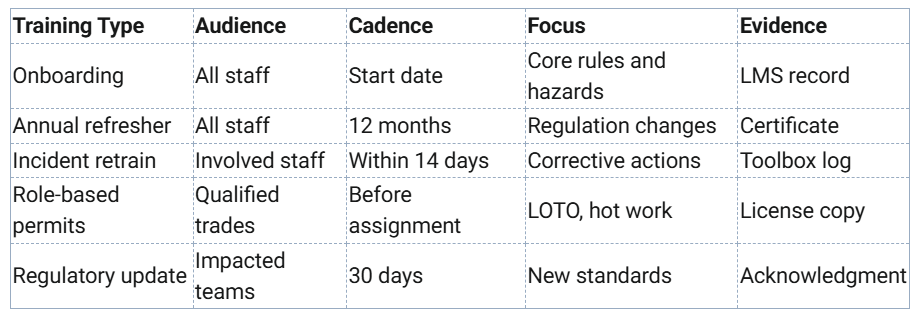
Use onboarding, annual refreshers, and role-based training to keep knowledge current. Ongoing education reduces incident rates and simplifies audits.
Suggested training schedule:
3. Establish and Maintain a Safety Management System
A safety management system (SMS) provides structure for how an organization prevents incidents and manages risk. It creates consistency, improves documentation, and prepares sites for audits.
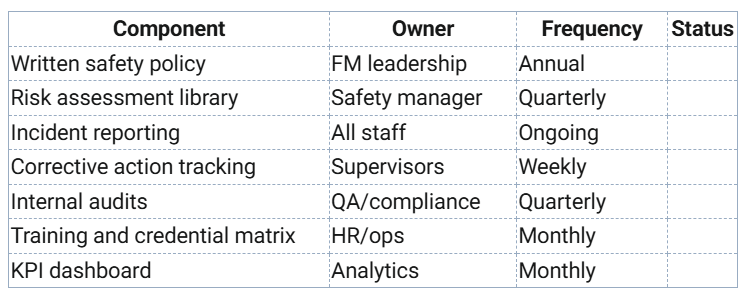
Core components include policy, roles, hazard identification, near-miss reporting, corrective actions, safety audits, and performance metrics.
SMS checklist:
4. Enhance Communication and Reporting Channels
Strong communication prevents injuries and compliance failures by surfacing hazards early.
Use simple tools: mobile forms, QR codes, hotlines, and recurring safety huddles. Standardize a reporting flow to ensure every issue is triaged and closed with documented actions.
Research in FM shows that insights often stay in leadership channels rather than reaching the field. Closing this loop reduces repeat incidents and strengthens trust.
5. Monitor, Audit, and Verify Licensing Compliance
Every technician performing regulated work must hold the correct, active license. Verification should be ongoing, not annual.
Use quarterly or annual credential reviews plus unannounced spot audits. Centralized oversight ensures consistency across sites and vendors.
Items to verify:
- License scope and jurisdiction match the work
- Expiration dates extend beyond scheduled tasks
- Insurance and bonding meet requirements
- Permits align with work orders and site files
6. Leverage Technology to Streamline Compliance
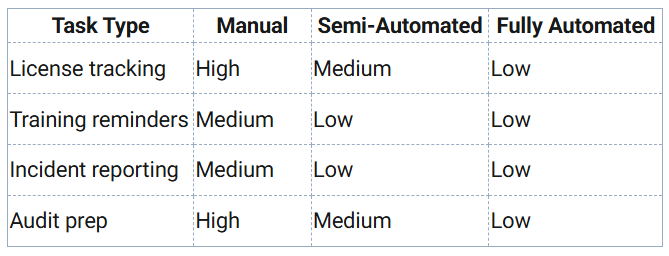
Digital tools improve accuracy, reduce manual effort, and maintain audit-ready records across large portfolios.
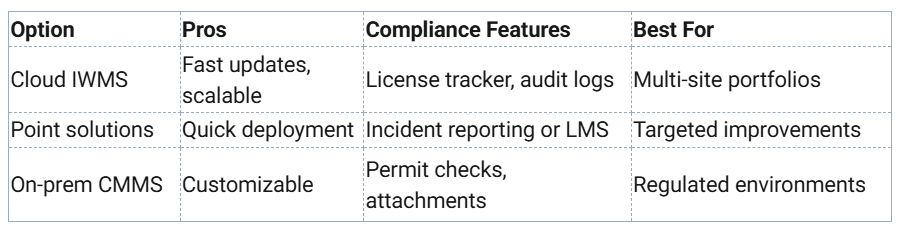
IWMS platforms consolidate credential tracking, audit logs, training records, and work order data. Point solutions can supplement with incident reporting or training modules.
Comparison table:
Practical ideas:
- Integrate LMS with the work order system to block unqualified task assignment
- Use mobile apps for near-miss reporting with photos
- Automate licensing renewal reminders
Compliance Load Reduction by Automation Level
7. Cultivate a Proactive Safety and Compliance Culture
Culture determines whether safety is a program or a shared value. Leaders shape this through consistency, visibility, and recognition.
Form safety committees, set measurable goals, share results, and recognize hazard reporting and mentoring. Keep communication open so staff see action taken on their feedback.
Frequently Asked Questions
What are the most critical safety regulations FM staff should follow?
FM staff must follow OSHA, state licensing requirements, and industry-specific standards governing site safety and regulated work.
How often should FM staff complete safety and licensing training?
At least annually, with additional refreshers tied to incidents, role changes, or updated regulations.
What technology helps track compliance effectively?
IWMS platforms and FM compliance tools that centralize licenses, certifications, audits, and training records.
How can facility managers foster a culture of safety?
Model the behaviors you expect, recognize positive actions, and maintain open communication with clear follow up.
What are the risks of non-compliance?
Accidents, legal penalties, insurance increases, reputational damage, and avoidable downtime.
Want to talk facilities?
Leave a comment or question below and we'll reach out!