

Commercial refrigeration repair costs vary significantly by region, with higher hourly rates and service fees in the Northeast and West and lower averages in the South and Midwest. Urban markets command premium pricing due to labor demand, unionization, and travel time. This 2025 guide helps retail facility leaders benchmark costs, understand what drives variability, and plan budgets across multi site portfolios. Vixxo’s nationwide technician network and centralized dispatch model help control these costs through preventive maintenance, standardized work orders, and service level commitments that scale across retail formats.
Overview of Commercial Refrigeration Repair Pricing Trends
The commercial refrigeration repair category is projected at roughly 5.8 billion dollars by 2025, growing at about 6.5 percent CAGR through 2033. Regulations, energy efficient equipment, and connected monitoring systems shape pricing trends this year. Skilled technician shortages, the AIM Act refrigerant phasedown, and more predictive maintenance tools all influence repair frequency and total cost of ownership.
Key Cost Factors
Repair costs typically reflect local labor rates, parts pricing, travel time, refrigerant type, system complexity, and required documentation. Emergency refrigeration repairs are the most expensive events. Critical failures often average 2,500 to 8,000 dollars per incident when overtime labor, expedited parts, and product loss are included. Parts inflation, labor shortages, and stricter EPA regulations add secondary pressure to pricing.
Primary cost drivers include:
- Technician availability
- EPA and refrigerant compliance requirements
- OEM versus aftermarket parts
- Urban versus rural geography
Regional Variations in Repair Pricing
Regional cost differences stem from technician density, cost of living, unionization, and travel time. The Northeast and West are consistently the highest cost regions, with the Midwest and South offering lower averages.
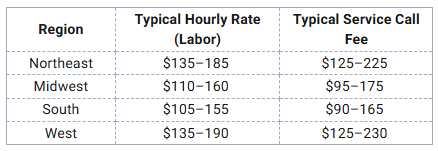
Urban sites face the highest pricing due to congestion, higher wages, and premium demand. Suburban locations generally see moderate rates and faster response times. Rural stores may have lower hourly rates but higher travel surcharges and limited parts availability.
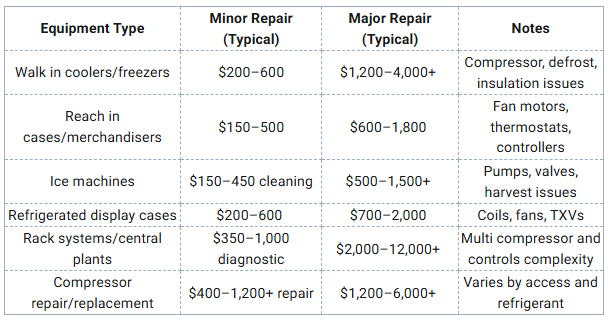
Typical Repair Costs by Equipment Type
Most single event repairs range from $100 to $1,200, with major events for complex systems running much higher.
Preventive Maintenance and Its Impact on Cost
Preventive maintenance (PM) is one of the strongest levers for reducing repair spend. Basic annual PM often starts around $125 dollars/unit. By preventing even one emergency event, retailers can save thousands in avoided dispatch, overtime, and product spoilage. PM programs with monitoring typically save $3,000 to $6,000 per store.

Emergency and After Hours Repair Pricing
Emergency refrigeration calls are commonly two to three times more expensive than planned repair. Retailers should expect overtime premiums of 25 to 50%, minimum hour charges, travel surcharges, and expedited parts costs. Rural and dispersed portfolios can see the largest add ons due to distance and technician scarcity.
Regulatory and Environmental Impacts
The AIM Act refrigerant phasedown is increasing cost pressure as high GWP refrigerants become more expensive and less available. Low GWP systems, such as CO2 or HFO blends, may have higher service costs in the short term due to specialized training and components but reduce long term cost risk and improve energy efficiency. Compliance documentation, leak detection, and refrigerant tracking also add incremental service line items.
Contract Models and SLAs for Retail Portfolios
Choosing the right contract model helps align cost and risk. Full coverage plans offer predictable spend with fewer surprises but higher upfront fees. Time and materials contracts offer flexibility but expose retailers to emergency volatility. National partners deliver consistent SLAs, centralized dispatch, and portfolio wide reporting, which helps large retailers benchmark and control spend.
What Retailers Should Expect During a Service Call
A typical visit includes technician check in, diagnostics, quote approval, repair, testing, and documentation. Diagnosis usually takes 30 to 90 minutes, with minor repairs completed same day. Best practice documentation includes parts and labor detail, photos, refrigerant logs, and leak test results.
Frequently Asked Questions
What are typical commercial refrigeration repair labor rates by region in 2025?
Labor rates trend highest in the Northeast and West due to cost of living and technician demand, while the South and Midwest generally offer lower averages. Urban stores see the steepest premiums because of travel, congestion, and union presence in certain markets.
How much more expensive are emergency refrigeration repairs compared to scheduled repairs?
Emergency calls commonly cost two to three times more due to overtime premiums, minimum hour requirements, and expedited parts. A single after hours event can cost $2,500 to $8,000 dollars depending on asset type and urgency.
Do preventive maintenance programs actually reduce repair spend?
Yes. Annual PM and temperature monitoring typically prevent enough emergency events to save $3,000 to $6,000 per store each year, while also reducing product loss and energy waste.
How do new refrigerant regulations affect 2025 repair costs?
The AIM Act HFC phasedown raises costs for high GWP refrigerants and increases training, recovery, and documentation requirements. Low GWP systems may cost more to service initially but reduce long term regulatory risk and energy consumption.
What fees should retailers expect for after hours or urgent repair calls?
Overtime premiums of 25 to 50%, minimum hour charges, travel surcharges, and same day parts procurement fees are common. Rural sites often see higher add ons due to distance and limited technician availability.
How can multi site retailers control refrigeration repair budgets across regions?
Standardize SLAs, use centralized work orders, benchmark repair cost per asset and store, and partner with a national provider that delivers consistent documentation, route density, and analytics driven PM. This reduces emergency exposure and normalizes pricing across markets.
Want to talk facilities?
Leave a comment or question below and we'll reach out!