
Key Takeaways
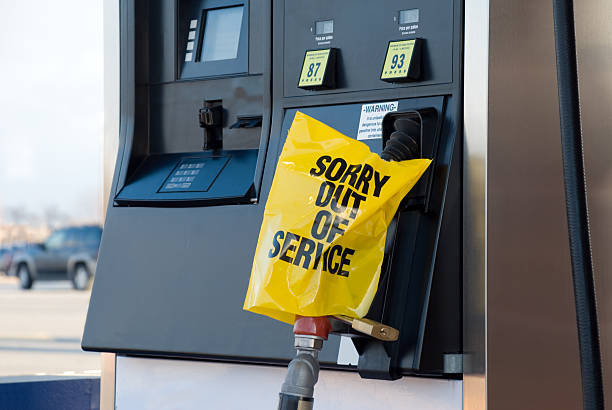
• Gas prices are up roughly 20%, increasing customer price sensitivity at the pump.
• Inside sales drive over 60% of store profit, making facilities execution critical.
• Clean restrooms, strong lighting, reliable HVAC, and equipment uptime directly impact conversion.
Why Facilities Execution Matters More During Fuel Volatility
Customers arriving at your sites today are not neutral. They are pulling in after absorbing a roughly 20% increase in fuel prices, with the national average climbing from $2.98 to $3.58 per gallon in just weeks. Diesel prices have risen nearly 28%, adding pressure to freight and supply chains. Economists warn that energy-driven price increases could push monthly inflation close to 1%.
That financial stress does not stop at the pump. It follows customers inside.
And that shift in mindset changes how they evaluate your store.
When fuel prices rise, tolerance for friction falls. Shoppers become more deliberate. They scan for signals of value, cleanliness, and trust. The restroom condition, lighting quality, store temperature, and food freshness carry more weight than ever. These details directly influence whether a customer walks inside, how long they stay, and how much they spend.
Fuel margins are thin even in stable markets. Inside sales stabilize profitability. In periods of energy volatility, the in-store experience becomes even more critical to offset margin compression at the pump.
Facilities execution sits squarely at that intersection.
A clean, well-lit canopy and fully functioning pumps establish trust before the customer ever steps inside. Once through the door, a comfortable HVAC (Heating, Ventilation, and Air Conditioning) environment, bright interior lighting, and high-performing refrigeration and beverage equipment determine whether traffic converts into transaction.
This is not cosmetic. It is financial.
As households tighten budgets and reconsider discretionary spending like dining out, convenience stores have an opportunity to capture redirected spend. But that opportunity only materializes when facilities performance supports it. If the beverage cooler is down, the restroom is neglected, or the store feels uncomfortable, conversion drops immediately.
The image below outlines the highest-impact focus areas for facilities leaders right now.
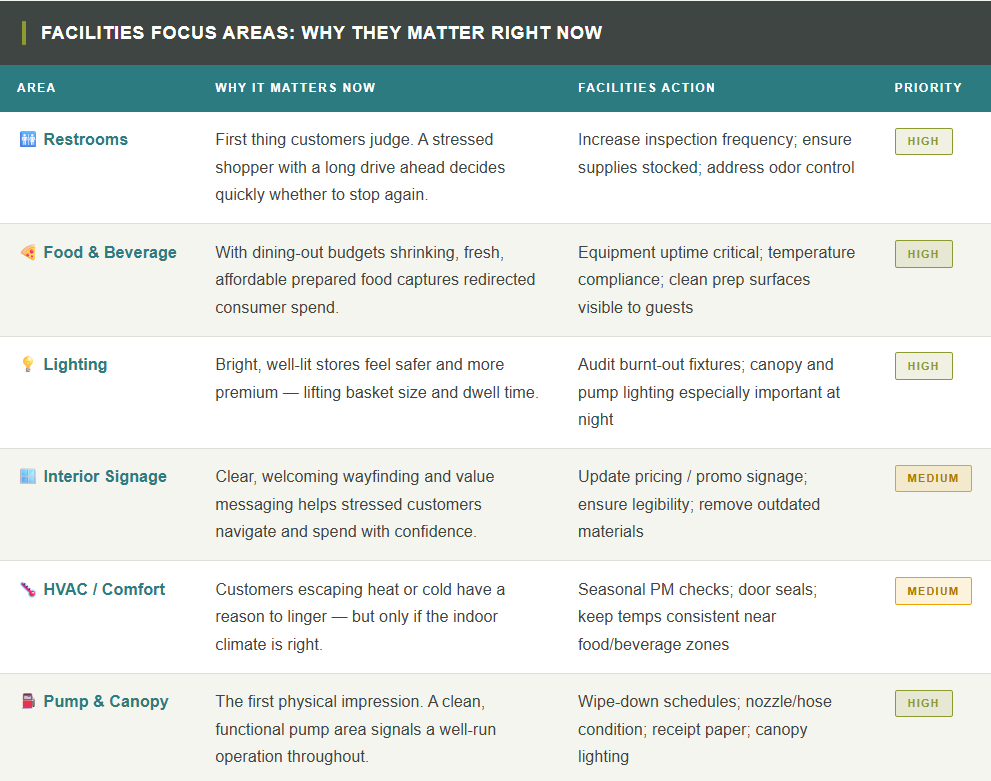
These priorities are not theoretical. They are operational levers:
• Restrooms influence repeat visits.
• Food and beverage uptime protects margin.
• Lighting affects dwell time and basket size.
• Interior signage reduces friction and builds confidence.
• HVAC consistency drives comfort and length of stay.
• Pump and canopy condition set the first and most lasting impression.
In volatile markets, operational precision becomes competitive advantage.
The strategic challenge for facilities leaders is twofold:
- Protect revenue-generating assets.
- Control total cost of ownership (TCO).
Reactive maintenance costs significantly more than planned maintenance and often creates avoidable downtime. During fuel price spikes, downtime does not just create expense. It eliminates margin opportunity when customers are already price sensitive.
Disciplined preventive maintenance, invoice controls, and repeat-call elimination become critical levers. Protecting uptime for refrigeration, espresso, ovens, and beverage platforms ensures high-margin products remain available when conversion matters most.
The Bottom Line
You cannot control crude oil prices.
You cannot control global instability.
You can control execution.
When pump prices rise 20% and diesel climbs nearly 28%, customers become more selective. The stores that win are not necessarily those with the lowest posted fuel price. They are the ones that convert stressed traffic into confident inside purchases.
In this environment, facilities performance is not a cost center. It is a margin protection strategy.
Now is the moment to raise the bar, not hold the line.
Frequently Asked Questions
How do rising fuel prices impact facilities strategy?
Higher fuel prices increase customer price sensitivity and compress fuel margins. Facilities execution becomes critical to converting pump traffic into inside sales.
Why does diesel inflation matter at the store level?
Diesel prices rising nearly 28% increase freight and supply chain costs, putting added pressure on operating budgets and reinforcing the need for cost discipline.
What is the most important metric during fuel volatility?
Equipment uptime for refrigeration and beverage platforms. If high-margin products are unavailable, conversion declines immediately.
Should facilities budgets increase during energy volatility?
Budgets should prioritize preventive maintenance and high-traffic site audits. Protecting uptime and eliminating repeat calls reduces overall spend while protecting revenue.
Source: PBS NewsHour / AP
Want to talk facilities?
Leave a comment or question below and we'll reach out!