
AI in Facilities
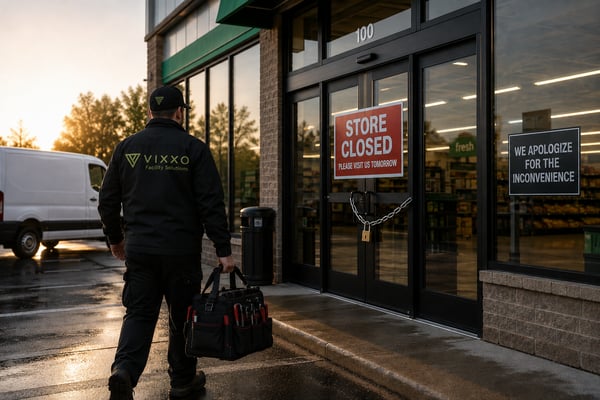
A stuck automatic door or failed panic hardware at 6 a.m. is a customer experience crisis, not a routine ticket. Facilities management (FM) leaders running grocery, convenience, and specialty retail portfolios are using artificial intelligence (AI) work order triage to route locksmith and entrance hardware calls faster when every minute of downtime matters.
By Vixxo Facility Solutions
|
40+ Specialized trades Vixxo coordinates nationally, including doors and hardware |
30-40% Improvement in mean time to resolution reported by facilities that automate triage within their first 60 days1 |
30% Reduction in manual triage workload reported by multi-site operators after adopting AI work order routing2 |
Sources: Vixxo brand proof points; 1Oxmaint, "AI Work Order Triage for Facility Service Desks," 2026; 2Fexa, "The Complete Guide to AI in Facilities Management," 2025. Figures are vendor-reported industry data, not Vixxo-specific results.
Why entrance hardware tickets stall in traditional FM queues
Doors, locks, closers, and panic hardware sit at the front door, where customer experience starts. Yet most multi-site operators still route entrance failures through the same first-in-first-out queue as interior lighting or signage repairs. A regional grocery operator with 250 locations may log 15 to 25 entrance-related calls each week, but only a handful truly block store access.
Without priority scoring, dispatchers spend time clarifying whether a call needs a locksmith, a door hardware technician, or an automatic door specialist. That back-and-forth adds 30 to 90 minutes while shoppers queue outside or staff prop open a compromised entrance.
How AI triage classifies and routes entrance work
AI work order triage reads the ticket description, asset history, and site context to score urgency and match the right trade. A call tagged "main entrance will not unlock before opening" ranks above a sticky closer on a stockroom door. The system also flags repeat failures on the same asset, suggesting preventive maintenance (PM) instead of another reactive locksmith visit.
| Entrance symptom | AI-suggested trade | Priority tier |
|---|---|---|
| Store cannot open; panic hardware jammed | Locksmith + door hardware | Critical (revenue blocking) |
| Automatic door cycles slowly | Automatic door specialist | High (CX impact) |
| Interior office lock rekey request | Locksmith | Standard |
Own the outcome on critical maintenance and repairs that matter most to customer experience. Entrance hardware failures are exactly the work orders that cannot wait behind lower-priority tickets.
What facilities directors should configure first
Start by tagging every entrance asset in your computerized maintenance management system (CMMS): main customer doors, receiving entrances, and ADA-compliant automatic openings. Feed six months of historical locksmith invoices into the triage model so AI learns your regional labor patterns and common failure modes.
Pair triage with VixxoVerify on completed work orders to catch inflated after-hours locksmith premiums and duplicate trip charges. The combination protects total spend while keeping response speed high on the hardware that shapes first impressions from the front door in.
| Read the grocery entrance security checklist |
Frequently Asked Questions
Does AI triage replace human dispatchers for locksmith calls?
No. AI scores and routes tickets so dispatchers focus on exceptions and provider coordination. Human review remains on high-cost after-hours dispatches and any work that affects life-safety hardware.
Which retail formats benefit most from entrance hardware triage?
Grocery, convenience, and quick-service restaurant (QSR) operators with strict opening windows see the largest return, since a blocked main entrance before peak hours directly affects transaction volume and staff overtime.
How long does it take to train AI on door and lock work order history?
Most operators see useful priority scoring within four to six weeks once entrance assets are tagged and historical invoices are imported. Accuracy improves as the model processes more completed tickets with verified trade assignments.
Can AI triage connect to preventive door hardware programs?
Yes. When the same closer or panic device generates three tickets in 90 days, the system flags it for scheduled PM instead of another emergency dispatch. That shift reduces after-hours locksmith spend over time.
Sources: Vixxo brand proof points; Oxmaint, "AI Work Order Triage for Facility Service Desks"; Fexa, "The Complete Guide to AI in Facilities Management"; Protect Every Entry: The 2026 Grocery Store Door Security Checklist.