
Seasonal site readiness
A November exterior lighting walkthrough for convenience store and fuel site facilities teams.
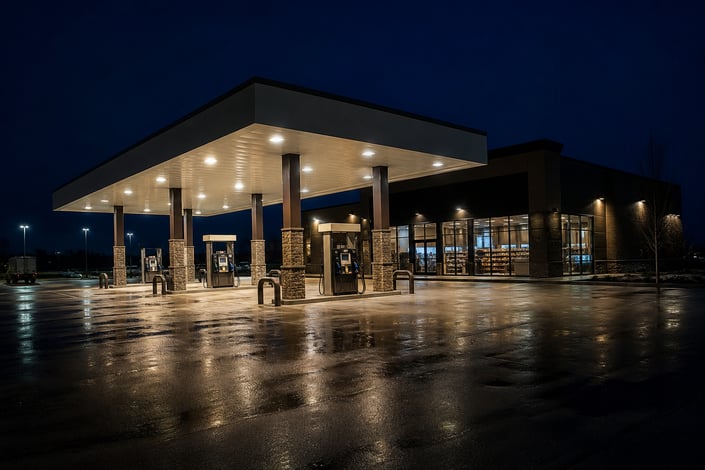
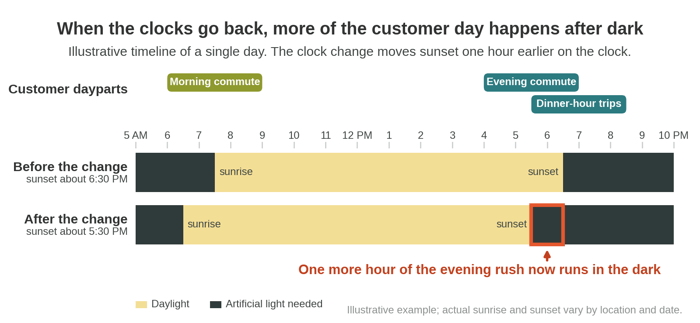
Every November, the clock change makes one facilities topic more visible almost overnight: exterior lighting. For convenience stores, shorter days do not just mean darker parking lots. They mean more fuel stops, foodservice visits, employee shift changes, and customer walk-ins happening under artificial light. The same site that looked ready at 3 p.m. can feel very different at 5:30 p.m., when a canopy fixture is dim, a timer is still on its summer schedule, or a shadow falls between the pump island and the front door.
That makes the clock change a practical reminder: inspect the site the way customers experience it after dark.
Why does exterior lighting matter more after the clocks change?
Convenience stores serve the dayparts that shorter daylight touches most: the morning commute, the evening commute, dinner-hour trips, and holiday travel. Customers are not only deciding whether a store is open. They are deciding whether the forecourt feels safe, easy to navigate, and worth stopping for.
Exterior lighting shapes that decision quickly. A bright, even forecourt helps customers see the pump, keypad, nozzle, receipt slot, nearby vehicles, walkways, entrances, and signage. It also supports employees who arrive, close, or change shifts during darker hours.
Lighting also carries brand trust. A well-lit canopy tells a driver the site is open and cared for before they ever reach the door, and that first impression is a core part of the customer experience.
What does the clock change bring to light?
Daylight saving time often highlights details that daytime visits cannot show. A fixture that dimmed over the summer may not stand out until sunset comes an hour earlier. A simple timer may still be set for summer hours. A photocell may be dirty or blocked. Tree growth, new signage, or site changes may have created shadows that were not obvious in daylight.
Commercial lighting and safety checklists consistently share one practice: walk the property after dark, not only during normal daytime inspections. A lot can look clean and well maintained at noon while still having dim pedestrian routes, uneven coverage, or glare that limits camera visibility after dusk. Different teams see different parts of a site, and an after-dark walk gives everyone a shared view of it.
Fuel sites deserve special attention at the canopy, which is part shelter, part lighting platform, and part brand system. A practical review looks for dark fixtures, cycling or flickering lights, uneven light between dispenser positions, lens damage, visible moisture, fascia lighting issues, and controls that turn lights on or off outside the expected schedule.
Electrical and canopy work belongs with qualified service providers. Site teams add the most value through safe observation and clear documentation, not by opening fixtures or troubleshooting energized equipment.
How do you run a November lighting readiness walkthrough?
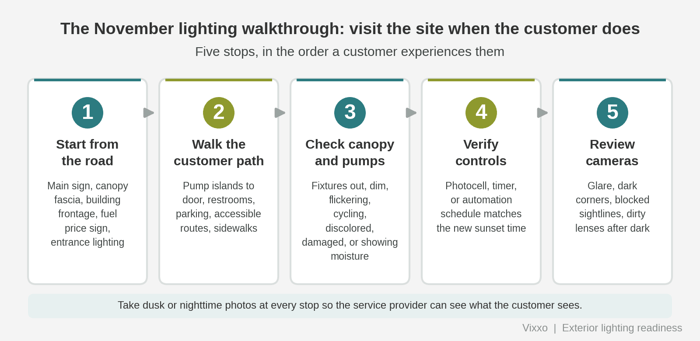
The best inspection is a simple one: visit the site when the customer does. Walk it after dark, take photos, and document what needs attention before one dim fixture becomes a customer complaint or a safety concern.
| Stop | What to look at | What to capture |
|---|---|---|
| 1. The road view | Main sign, canopy fascia, building frontage, fuel price sign, entrance lighting | Does the site look open, safe, and easy to enter from the street? |
| 2. The customer path | Pump islands to the front door, restrooms, parking spaces, accessible routes, high-use sidewalks | Dark gaps, trip hazards, uneven transitions, glare, and places a customer might hesitate |
| 3. Canopy and pump islands | Fixtures that are out, dim, flickering, cycling, discolored, damaged, or showing moisture | The exact location, such as “north canopy, dispenser 4, two dark fixtures” |
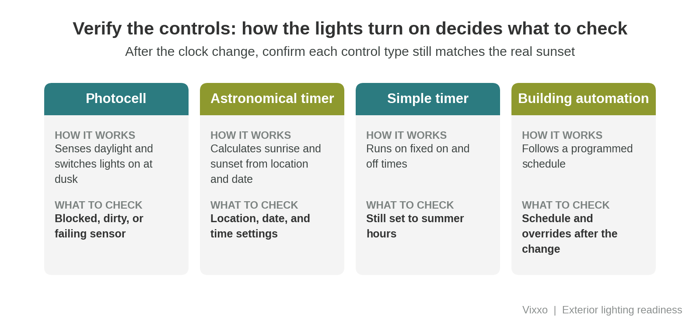
| 4. Controls | Photocell, astronomical timer, simple timer, or building automation schedule | Whether the on and off times match the new sunset, especially for fixed timers |
| 5. Cameras and visibility | Camera views after dark | Glare, dark corners, blocked sightlines, dirty lenses, and bright pools next to deep shadows |
A closer look at lighting controls
A late schedule can leave a site under-lit during one of its busiest evening windows, so confirm how the lights turn on and what each control type needs after the clock change.
What belongs in a lighting work order?
Good documentation helps the service provider diagnose the issue faster and improves first-time fix potential. A strong lighting work order includes:
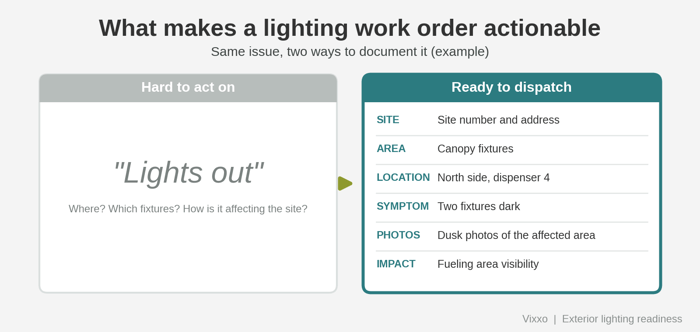
- Site number and exact location.
- Whether the issue involves the canopy, a pole light, a wall pack, a sign, the entrance, or a control schedule.
- Fixture location by pump number, pole number, building side, or photo markup.
- The symptom: out, flickering, dim, cycling, water intrusion, damaged lens, late timer, or photocell issue.
- Dusk or nighttime photos showing the area customers see.
- Whether the issue affects fueling, entrance visibility, employee areas, cameras, or accessible routes.
That level of detail turns a general lighting concern into actionable facilities work.
Frequently asked questions
When does daylight saving time end in 2026?
In most of the United States, clocks go back one hour at 2 a.m. on Sunday, November 1, 2026. Sunset then arrives an hour earlier on the clock.
Why does the clock change affect convenience store operations?
Evening commute, dinner-hour, and shift-change activity shifts into darkness. Fueling areas, entrances, walkways, and signage all depend on exterior lighting during those busy windows.
What should a site team check first?
Start with the customer view: the road, the path from the pumps to the door, the canopy, and the lighting controls. Take photos after dark and note exact fixture locations.
Who should repair canopy and exterior lighting issues?
Qualified electrical and canopy service providers. Site teams help most by observing safely and documenting clearly, without opening fixtures or working on energized equipment.
What makes a lighting work order faster to resolve?
Specific details: the exact location, the symptom, the area affected, and dusk or nighttime photos. A request like “north canopy, dispenser 4, two dark fixtures” gives a technician a head start.
The facilities opportunity
The clock change is a small seasonal event, but it creates a clear operational moment. It gives teams a reason to check exterior lighting before customers, employees, or store leaders ever need to mention it.
For convenience stores, the forecourt is the front door. When days get shorter, canopy and exterior lighting carry more of the customer experience, and keeping them ready supports safety, site appearance, fuel confidence, foodservice traffic, and brand trust.
The best move is simple: walk the site after dark, document what customers actually see, and route the right lighting work before the season turns every evening visit into a nighttime visit.
Vixxo helps multi-site operators keep critical exterior assets ready for the moments that matter most to customer experience, from fuel canopy lighting and parking lot fixtures to signage, controls, and seasonal site readiness. Learn more >>