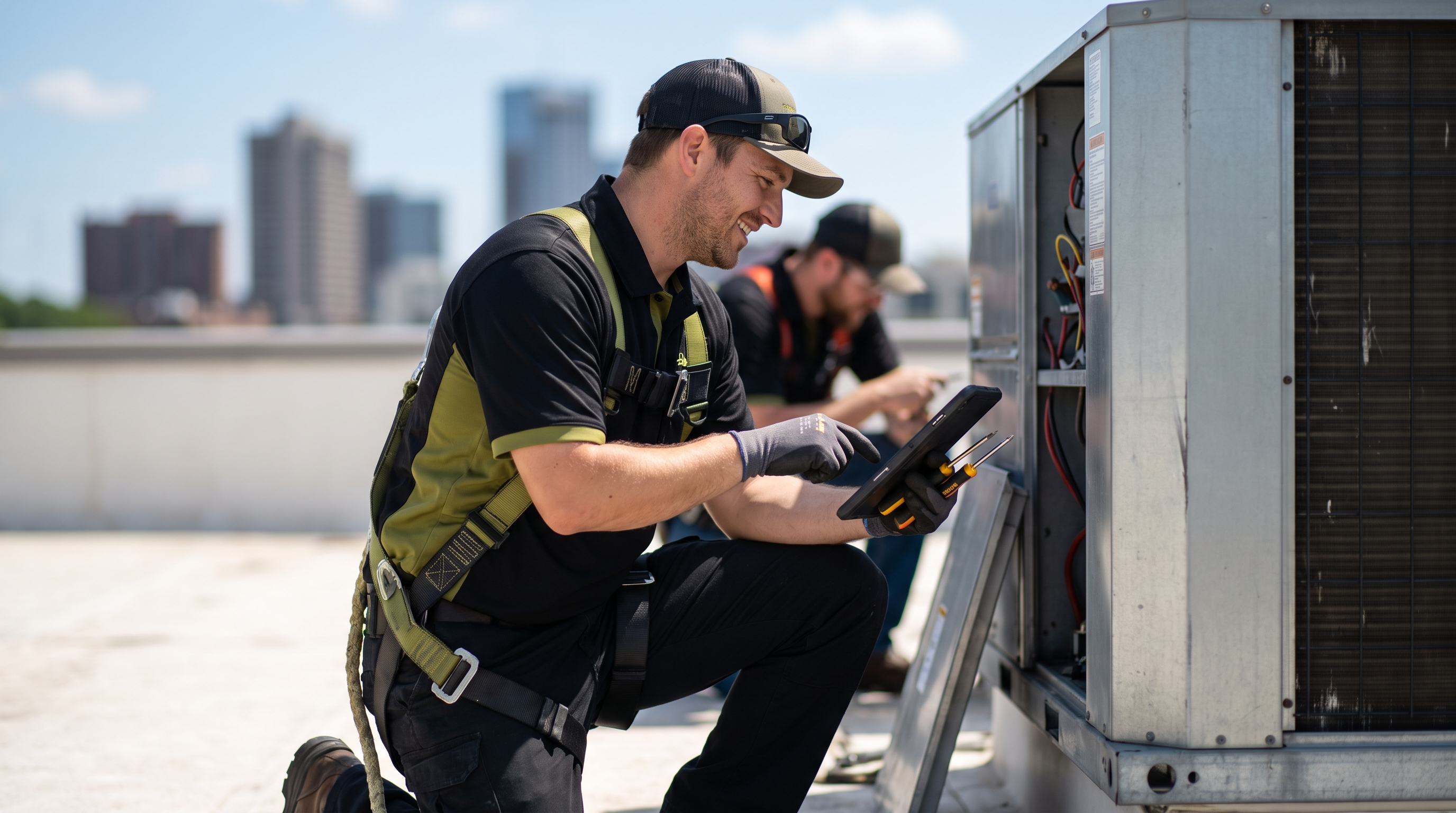


Total Cost of Ownership
Hourly rate is not total cost of ownership (TCO). For grocery, restaurant, convenience, and retail portfolios, TCO is labor, parts, travel, emergency versus planned work, and the asset's lifecycle stage, plus the customer experience you lose when a walk-in or espresso machine is down. Vixxo Facility Solutions owns that stack on critical maintenance: VixxoVerify on the invoice, repair-versus-replace on the asset, and a 150K+ service provider (SP) bench in thin markets. If your report only shows rate, you are managing a line item, not the outcome.
By Vixxo Facility Solutions
|
45M+ Data points used for routing, verify, and repair-versus-replace |
2.2M+ Assets under active facilities management (FM) |
5 Cost categories that belong on a facilities TCO scorecard |
Sources: Vixxo brand proof points on vixxo.com. Portfolio scale, not a guarantee for a single site.
VixxoVerify is total spend protection: parts, labor, trip, and junk fees checked against history. It is not a race to the lowest bid that leaves the technician unpaid and the store dark.
How do you calculate total cost of ownership for facilities?
Add the five categories below on every work order, then roll them up by asset, trade, and region. A good cost-per-work-order benchmark is useless if travel, overtime, and a third compressor are sitting in a different report. Heating, ventilation, and air conditioning (HVAC), refrigeration, plumbing, electrical, and food equipment each leak in a different bucket. Track them separately.
|
01 Labor On-site hours, overtime, and skill match. A cheaper rate that takes two visits costs more. |
02 Parts What was swapped versus what was billed. Unmatched parts are a TCO leak, not a vendor story. |
|
03 Travel Trip, mileage, and after-hours premiums. Thin markets punish you here, not on the hourly line. |
04 Emergency vs. planned Unplanned work often costs 3 to 9 times a preventive visit. Tag the reason, not just the trade. |
|
05 Asset lifecycle stage Repair versus replace on the same serial number. Across 3M+ revenue-generating assets in Vixxo's database, the third callback is usually a capital decision wearing a work-order number. |
|
Where does the typical work-order dollar actually go?
Illustrative mix for multi-site retail and foodservice (planning weights, not a published average from one chain).
| Labor |
|
38 |
| Parts |
|
28 |
| Travel and fees |
|
22 |
| Avoidable repeats |
|
12 |
If avoidable repeats sit in double digits, first-time fix and lifecycle review will move TCO faster than another rate negotiation.
How do you reduce FM costs without cutting service quality?
Protect spend with the network, not against it. Quotes in a day keep replace from becoming a week of shrink. Vixxo's field technician artificial intelligence (AI), helps the first visit land the right diagnosis so the history is clean. Vixxo publishes 10-15% faster time to completion versus industry when work stays on schedule. Use that as a comparison template, not a one-store promise.
| Cost lever | What you measure | What Vixxo adds |
|---|---|---|
| Invoice audit | Exceptions per 1,000 invoices | Vixxo Verify on parts, labor, trip, and junk fees |
| First-time fix | Callbacks on HVAC, refrigeration, and food equipment | Field AI, plus a 40+ trade bench |
| Not-to-exceed and bundling | Same-site trips in the same week | Dispatch that groups trades without starving the SP |
| Repair versus replace | Cumulative cost vs. replacement on one asset ID | Lifecycle analytics on 2.2M+ managed assets |
| Read more on containing facility and equipment costs |
Frequently Asked Questions
How do you calculate total cost of ownership for facilities?
Sum labor, parts, travel, emergency versus planned work, and lifecycle cost on the same asset ID. Then add downtime that hits customer experience. A computerized maintenance management system (CMMS) that stores tickets without those five fields cannot produce TCO.
What is a good cost-per-work-order benchmark?
There is no single number that works for every trade and region. Compare like-for-like: same trade, same daypart, same geography. Vixxo's 45M+ data points exist to support that comparison. A national average that hides travel and overtime will lie to you.
How does invoice validation reduce FM costs?
It flags rate anomalies, duplicate charges, labor-duration gaps, stacked trip fees, and parts that do not match the asset. Share the reason with the SP. Pay the fair invoice fast. That is how you cut waste without cutting quality.
How is facilities TCO different from occupancy TCO?
Occupancy TCO often rolls rent, utilities, and workplace. Facilities TCO on revenue-generating equipment is the work order plus the lost daypart. Vixxo specializes in that second definition: from the front door in, on the assets customers can see and taste.
Sources: Containing facility and equipment costs; AI-powered invoice auditing; vixxo.com proof points (45M+ data points, 2.2M+ assets, 150K+ providers, 40+ trades).